Your shopping cart
😊 Product added to cart successfully
Product removed to cart successfully



10 tablets in 1 strip
(Inclusive of all taxes)

Prescription Required
Couldn't load pickup availability
Free shipping on orders above ₹300, shipped within 2 days of your order.

Product Description
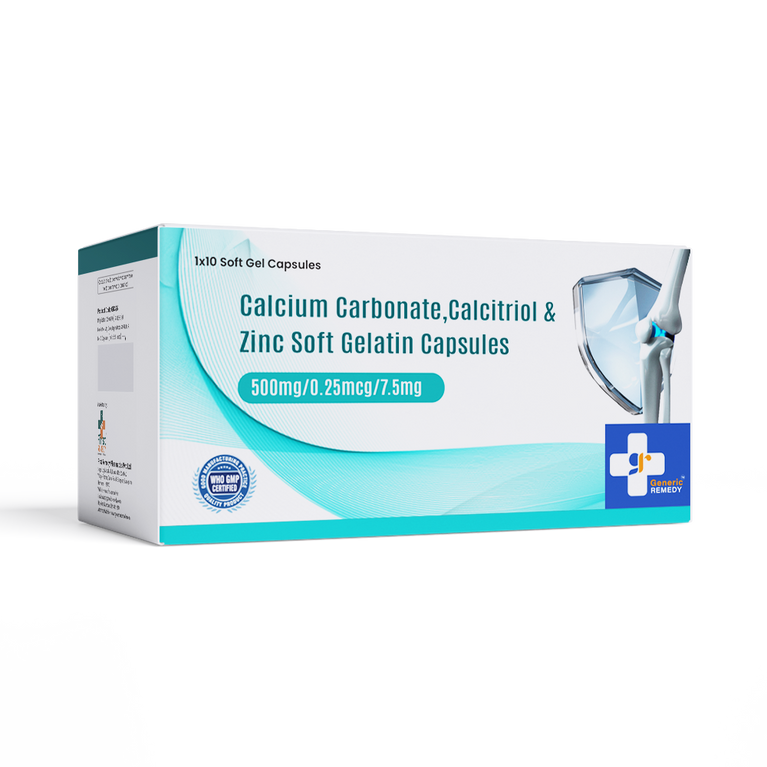
Calcium Carbonate 500 mg, Calcitriol 0.25 mcg & Zinc 7.5 mg Capsules IP is a nutritional supplement combining a calcium source, the active form of vitamin D, and an essential trace mineral, primarily used to treat and prevent calcium and vitamin D deficiencies, as well as associated bone disorders.
It supports bone mineralization, muscle function, and overall skeletal health by enhancing calcium absorption and utilization.
Calcium carbonate provides approximately 200 mg of elemental calcium per 500 mg dose (40% bioavailability), calcitriol (the hormonally active metabolite of vitamin D) promotes intestinal calcium and phosphate absorption, and zinc aids in bone formation and immune support.
This combination is indicated for conditions like osteoporosis (bone loss leading to fragility), osteomalacia/rickets (softening of bones due to vitamin D deficiency), hypoparathyroidism (low parathyroid hormone causing hypocalcemia), tetany (muscle spasms from low calcium), and metabolic bone disease in chronic kidney disease (CKD).
Uses
Treatment and prevention of osteoporosis (including postmenopausal) and osteomalacia (adult rickets)
Management of calcium deficiency (hypocalcemia) and related tetany (muscle cramps/spasms)
Adjunctive therapy for hypoparathyroidism (low parathyroid hormone)
Support for metabolic bone disease in chronic kidney disease (CKD) patients on dialysis
Promotion of bone health in nutritional deficiencies or post-surgical recovery (e.g., after parathyroidectomy)
How it works
Calcium Carbonate 500 mg, Calcitriol 0.25 mcg & Zinc 7.5 mg Capsules IP address bone health through synergistic mechanisms. Calcitriol (1,25-dihydroxyvitamin D3) binds to vitamin D receptors in the intestines, enhancing active transport of calcium and phosphate across enterocytes (absorption increases 30-40%), while also promoting renal reabsorption and bone mineralization by stimulating osteoblasts. Calcium carbonate dissociates in the acidic stomach to release calcium ions, which are absorbed and deposited into hydroxyapatite crystals in bone matrix for strength and density. Zinc (elemental 7.5 mg, likely as zinc sulfate or gluconate) acts as a cofactor in alkaline phosphatase and collagen synthesis, supporting osteoblast proliferation, bone formation, and reducing osteoclast activity to maintain bone density. Together, they correct deficiencies, stimulate proteoglycan synthesis for cartilage repair, and support erythropoiesis (red blood cell production) via zinc's role in heme synthesis, preventing anemia in deficiency states.
Benefits
Treats low blood calcium levels and prevents complications like osteoporosis (reduces fracture risk by 15-20% with consistent use), osteomalacia/rickets (improves bone softening and pain), and tetany (relieves muscle spasms)
Enhances calcium absorption (calcitriol boosts efficiency from 10-15% to 30-40%), ensuring better bone and teeth mineralization for overall skeletal strength and growth
Supports protein synthesis and immune function via zinc, aiding wound healing, red/white blood cell production, and reducing inflammation in bone disorders
Ideal for postmenopausal women (counters estrogen-related bone loss) or CKD patients (manages secondary hyperparathyroidism), improving mobility and quality of life
Provides comprehensive nutritional support without the need for multiple supplements, with zinc adding antioxidant protection to prevent oxidative stress in bones
How to use
Take as directed by your doctor, typically 1 capsule once or twice daily, depending on deficiency severity and lab results.
Swallow the capsule whole with a full glass of water; do not chew, crush, or break it (to avoid GI irritation from calcium release).
Best taken with food or immediately after meals to improve absorption (calcitriol enhances it; avoid with high-fiber/antacid meals that bind calcium). Maintain a fixed time daily for consistent levels.
If you miss a dose, take it as soon as remembered unless near the next—do not double up. Combine with a calcium-rich diet (dairy, greens) and sun exposure for vitamin D, but monitor intake to avoid excess (total daily calcium <2000 mg from all sources).
Duration: 3-6 months initially, with periodic blood tests; do not self-medicate long-term.
Side Effects
Nausea or vomiting
Constipation or diarrhea
Stomach pain or abdominal discomfort
Headache
Fatigue or weakness
Mood changes (e.g., irritability)
Fast or irregular heartbeat (palpitations)
Dry mouth or metallic taste (from zinc)
Rare but serious: Hypercalcemia (confusion, excessive thirst/urination, kidney pain), hyperphosphatemia (in CKD), or allergic reactions (rash, swelling)
Safety Advice
No direct alcohol interaction, but excessive alcohol can impair calcium absorption and bone health—limit intake and consult your doctor for moderate use.
Use during pregnancy only if prescribed (FDA category C for calcitriol; essential for fetal bone development, but monitor to avoid hypercalcemia—supplemental calcium needs increase to 1000-1300 mg/day). Safe during breastfeeding (passes into milk; supports infant bone growth—dose as per maternal needs).
Contraindicated in hypercalcemia, hypervitaminosis D, or vitamin D-resistant rickets. Caution in kidney disease (risk of stones/phosphate buildup; adjust dose in CKD, e.g., <0.5 mcg/day calcitriol), liver disease (impaired activation of vitamin D precursors), heart disease (hypercalcemia may cause arrhythmias), malabsorption syndromes (e.g., celiac—may need higher doses), or sarcoidosis (increased calcitriol conversion risk).
Inform your doctor of all medications to avoid interactions (e.g., thiazide diuretics increase calcium retention; corticosteroids reduce absorption; avoid with digoxin—risk of arrhythmias; zinc may interfere with antibiotics like quinolones/tetracyclines). Elderly patients (>65 years) may need lower doses due to reduced kidney function. Not for children <12 years without pediatric monitoring.
Overdose risk: Symptoms include nausea, weakness—seek emergency care. Regular monitoring (serum calcium, phosphate, 25-OH vitamin D, PTH) is crucial, especially in CKD or long-term use. Hydrate well to prevent stones; report persistent GI issues.
Storage Conditions
Store at temperatures below 30°C (86°F); do not freeze.
FAQs
What is this supplement used for?
This combination supplement is primarily used to treat and prevent calcium and Vitamin D deficiencies and to support bone health. It is often prescribed for conditions like osteoporosis, osteomalacia (soft bones), rickets, and postmenopausal bone loss.
How does it work?
Calcium Carbonate provides the necessary mineral for bone formation and maintenance.
Calcitriol (Vitamin D3) helps your body absorb calcium from the food you eat and supports muscle function.
Zinc is essential for bone mineralization and stimulating the cells that build bone.
How should I take this capsule?
Follow your doctor's instructions for dosage and frequency. The capsules can generally be taken with or without food, but if stomach upset occurs, taking them with a meal may help.
What if I miss a dose?
If you miss a dose, take it as soon as you remember. However, if it is almost time for your next dose, skip the missed one and continue with your regular schedule. Do not take a double dose.
How long will I need to take it?
The duration of treatment depends on your condition and your doctor's recommendation. For long-term deficiencies or conditions like osteoporosis, it may be a long-term supplement.
What are the common side effects?
Some common, mild side effects include constipation, stomach upset, nausea, headache, and loss of appetite.
Can this supplement cause high calcium levels?
Yes, excessive intake can lead to a condition called hypercalcemia (high calcium levels). Symptoms include increased thirst and urination, weakness, fatigue, and confusion.
Can I take this if I have kidney problems?
You should use caution if you have kidney disease or a history of kidney stones. Consult your doctor, as Calcitriol can affect phosphate levels, and excess calcium can contribute to stone formation.
Is it safe during pregnancy?
If you are pregnant or breastfeeding, it's advised to consult your doctor before taking this supplement. Your doctor will determine if the benefits outweigh any potential risks.
Can I take this with other medications?
Inform your doctor about all medications and supplements you are taking, as this supplement can interact with certain antibiotics, heart medications, and steroids.
Should I avoid any foods while taking this?
Drinking alcohol excessively can affect calcium absorption. It is also wise to consume caffeine in moderation, as high amounts can interfere with calcium uptake.
 Manufacturer Name:
 Astonea Labs Limited
Marketed by: First Remedy Pharmacies Private Limited
The information provided on this website is for general informational purposes only and is not intended as a substitute for professional medical advice, diagnosis, or treatment. Always consult with a physician or qualified healthcare provider for any medical concerns. Never disregard professional advice or delay seeking it based on the information you read here.