Your shopping cart
😊 Product added to cart successfully
Product removed to cart successfully



Packet of 1 sachet
(Inclusive of all taxes)

Prescription Required
Couldn't load pickup availability
Free shipping on orders above ₹300, shipped within 2 days of your order.
Product Description
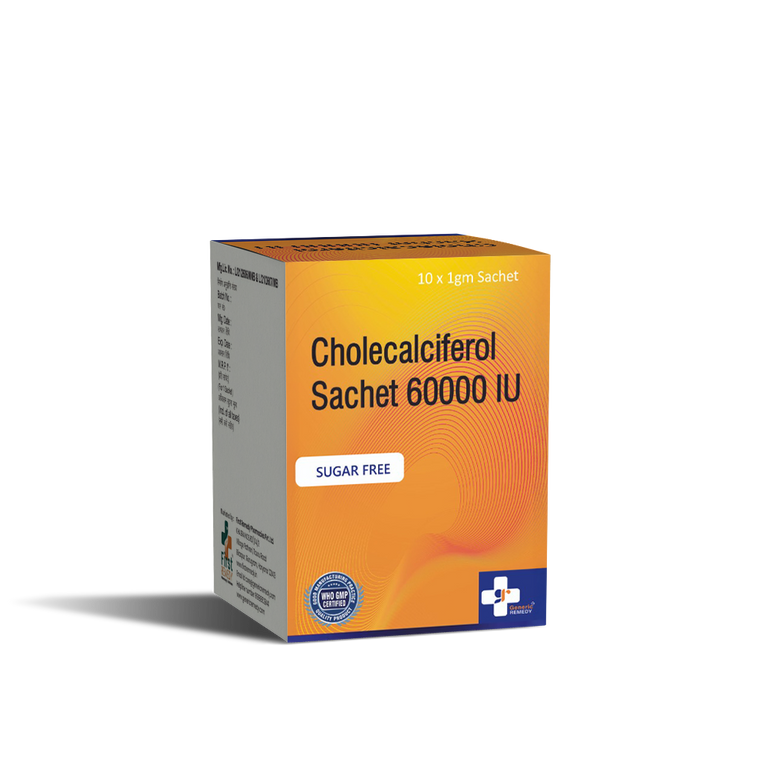
Cholecalciferol Granules 60,000 IU per 1 g IP is a high-potency Vitamin D3 (cholecalciferol) supplement in granular/sachet form for oral administration. It rapidly corrects severe Vitamin D deficiency (e.g., serum 25(OH)D <20 ng/mL) and supports related conditions like osteoporosis, osteomalacia, rickets, and hypocalcemia. Each 1 g sachet delivers 60,000 IU, typically taken weekly for 6–8 weeks under supervision, followed by maintenance (e.g., 1,000–2,000 IU daily). Sugar-free formulations suit diabetics; the fat-soluble nature requires dietary fat for optimal absorption. Prescription-only for high doses; evidence from RCTs shows 60,000 IU weekly raises levels by 20–30 ng/mL in 8 weeks.
Use
Treatment of severe Vitamin D deficiency in adults and children (e.g., due to limited sun exposure, malabsorption, or renal disease)
Prevention and management of bone disorders: Osteoporosis (fracture risk reduction), osteomalacia (softening), and rickets (in pediatrics)
Adjunctive therapy for hypocalcemia, secondary hyperparathyroidism, or chronic kidney disease (pre-dialysis)
Supportive in conditions like muscle weakness, falls in the elderly, or immune modulation (e.g., autoimmune diseases)
Not indicated for mild deficiency (use lower doses), hypercalcemia, or routine supplementation without testing
How it works
Cholecalciferol (Vitamin D3) is a prohormone that undergoes hepatic and renal activation to exert its effects:
Absorption and Activation: Ingested granules dissolve in the small intestine, absorbed via passive diffusion (enhanced 30–50% with fats). In the liver, it's hydroxylated by 25-hydroxylase to 25-hydroxyvitamin D (calcidiol, storage form; half-life 2–3 weeks). In the kidneys, 1-alpha-hydroxylase converts it to 1,25-dihydroxyvitamin D (calcitriol, active form).
Physiological Actions: Calcitriol binds vitamin D receptors (VDRs) in intestines, bones, and kidneys, promoting calcium/phosphorus absorption (increases by 30–40%), mineralization (via osteoblasts), and parathyroid hormone (PTH) suppression. It also modulates immunity (e.g., reduces pro-inflammatory cytokines) and muscle function.
Onset and Duration: Levels rise within 1–2 weeks; therapeutic effects (e.g., bone density) are seen in 3–6 months. Weekly high-dose mimics sunlight synthesis for rapid repletion.
Benefits
Rapid deficiency correction: Boosts serum 25(OH)D by 20–40 ng/mL in 4–8 weeks (per Endocrine Society trials), alleviating symptoms like fatigue, bone pain, and muscle weakness.
Bone and skeletal health: Enhances calcium absorption (up to 95% efficiency), reducing osteoporosis fracture risk by 15–20% (meta-analyses in JAMA) and preventing osteomalacia/rickets.
Immune and muscle support: Modulates innate immunity (e.g., 10–25% reduced infection risk in deficient patients per VITAL trial); improves muscle strength and reduces falls in the elderly (20% benefit).
Overall wellness: Supports cardiovascular health (mild BP reduction) and mood; high-dose suitable for at-risk groups (e.g., obese, dark-skinned, or indoor lifestyles) without daily compliance issues.
Side Effects
Common side effects (mild, <5% incidence; often dose-related):
Gastrointestinal: Nausea, vomiting, constipation, stomach upset
General: Weakness, fatigue, dry mouth
Less common/rare but serious side effects (seek immediate medical attention):
Hypercalcemia/hypercalciuria: From overdose (symptoms: thirst, frequent urination, confusion, kidney stones)
Renal: Impaired function or nephrocalcinosis (long-term excess)
Other: Allergic rash, metallic taste; rare in therapeutic use, but monitor in renal/liver disease
Toxicity threshold: >10,000 IU/day chronic or >300,000 IU acute—rare with supervised weekly dosing.
Safety Advice
Contraindicated in: Hypercalcemia, hypervitaminosis D, malabsorption syndromes (e.g., sarcoidosis—extrarenal activation), or hypersensitivity. Use caution in renal impairment (eGFR <30 mL/min—monitor calcium), hepatic disease (impaired activation), or history of kidney stones.
Pregnancy/breastfeeding: Category C—high doses only if deficient (benefits for maternal bone health outweigh risks; RDA 600 IU, up to 4,000 IU safe); passes into milk (monitor infant levels). Not for self-use in pregnancy.
Monitoring: Baseline and periodic serum 25(OH)D (target 30–50 ng/mL), calcium, PTH, and renal function; avoid with thiazides (hypercalcemia risk) or steroids (reduced efficacy).
Interactions: Potentiates calcium supplements/digitalis (arrhythmia); reduces absorption with orlistat/cholestyramine—space doses. Inform the doctor of all medications (e.g., anticonvulsants accelerate breakdown).
Lifestyle: Pair with sun exposure/magnesium-rich diet; hydrate well. Not a substitute for testing—over-supplementation risks toxicity.
Storage Conditions
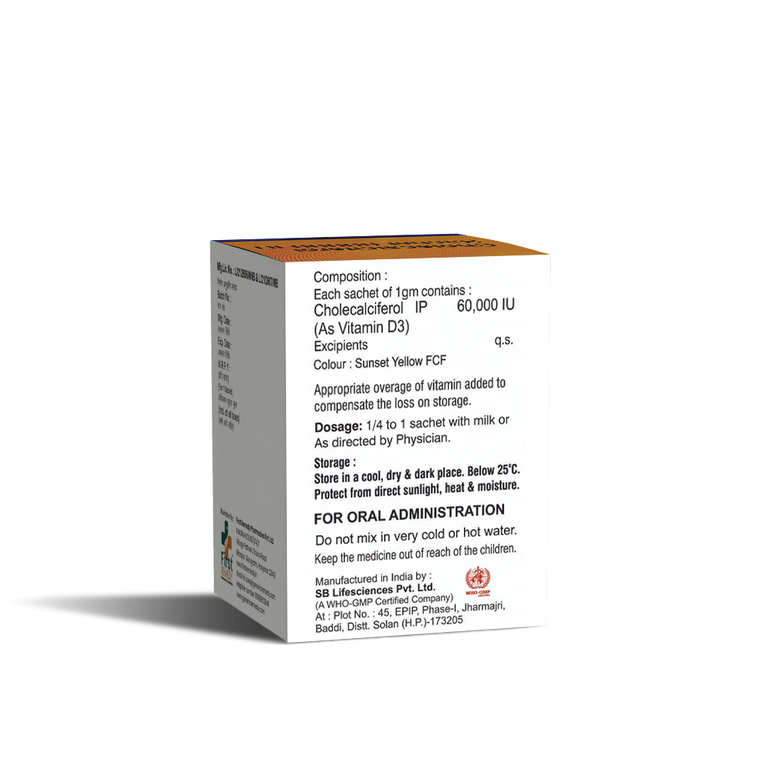
Store at a temperature below 86°F (30 °C). Protect from light and moisture.
FAQs
Is it safe to take 60,000 IU of Vitamin D3?
Yes, but only under a doctor's supervision for a severe vitamin D deficiency. It is not meant for daily use and should not be self-medicated, as an overdose can be harmful.
How often should I take this high-dose supplement?
The frequency will be determined by your doctor based on your specific needs and the severity of your deficiency. Typically, this high dose is taken once a week for a few weeks.
What happens if I take too much?
An overdose can be harmful and lead to hypercalcemia, an abnormally high level of calcium in the blood. Symptoms can include stomach upset, nausea, vomiting, loss of appetite, fatigue, increased thirst, and frequent urination.
Should I take it with or without food?
It is best to take it with or immediately after a meal, preferably with a fatty meal or milk, to improve absorption. Vitamin D is a fat-soluble vitamin, so fat helps the body absorb it effectively.
Can I give this to a child?
This high-dose supplement is not suitable for babies or young children. A doctor should be consulted for the correct dosage for children, as their needs differ significantly.
Are there any side effects?
When taken as prescribed, side effects are rare. However, some people might experience mild side effects like constipation, dry mouth, or nausea. Severe side effects are usually related to an overdose.
Can pregnant or breastfeeding women take this?
High doses of vitamin D should be taken by pregnant or breastfeeding women only under a doctor's supervision.
How does this supplement work?
Cholecalciferol is a form of vitamin D3. When consumed, it is converted by the body into its active form, which helps in the proper absorption of calcium and phosphorus and supports bone health.
Why does vitamin D deficiency occur?
Deficiency can be caused by inadequate sunlight exposure, poor diet, certain medical conditions that affect nutrient absorption (like Crohn's disease or celiac disease), or specific dietary restrictions (such as veganism).
How long will it take to see improvement?
It may take several weeks to raise vitamin D levels, depending on the severity of the deficiency. It is important to follow the prescribed duration of treatment.
 Manufacturer Name:
 SB Lifesciences Private Limited
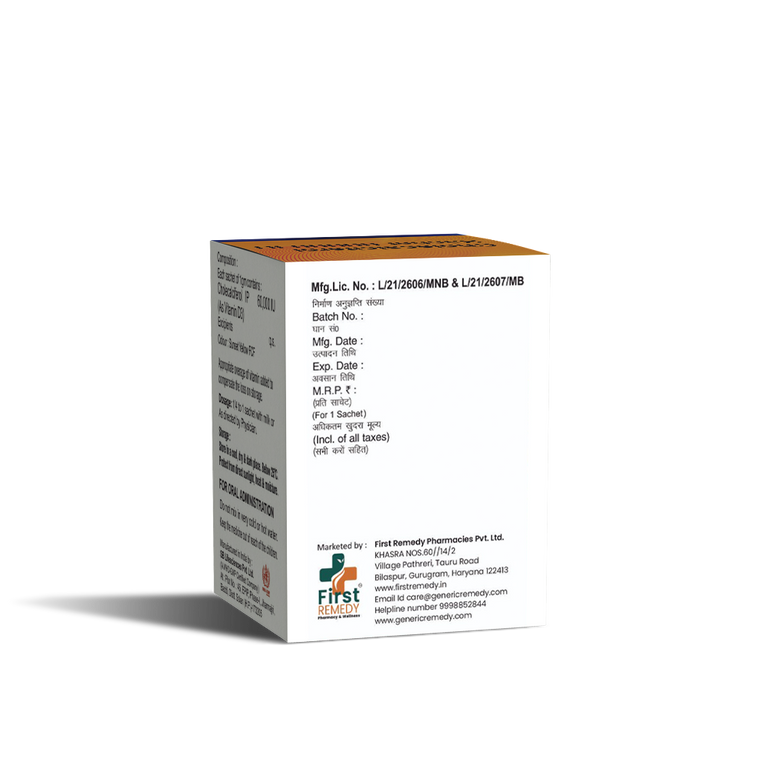
Marketed by: First Remedy Pharmacies Private Limited
The information provided on this website is for general informational purposes only and is not intended as a substitute for professional medical advice, diagnosis, or treatment. Always consult with a physician or qualified healthcare provider for any medical concerns. Never disregard professional advice or delay seeking it based on the information you read here.