Your shopping cart
😊 Product added to cart successfully
Product removed to cart successfully



100ml in 1 bottle
(Inclusive of all taxes)

Prescription Required
Couldn't load pickup availability
Free shipping on orders above ₹300, shipped within 2 days of your order.

Product Description
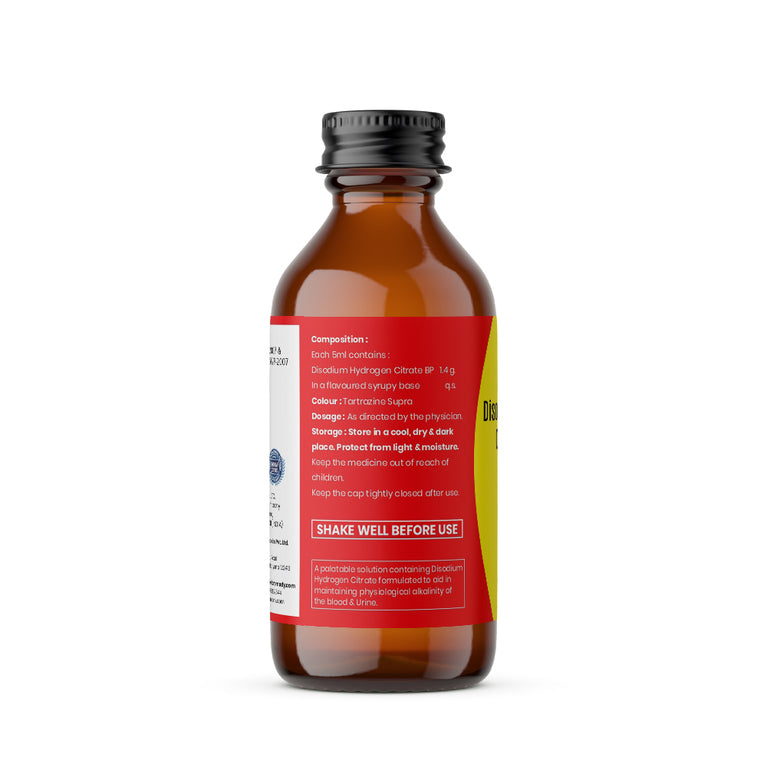
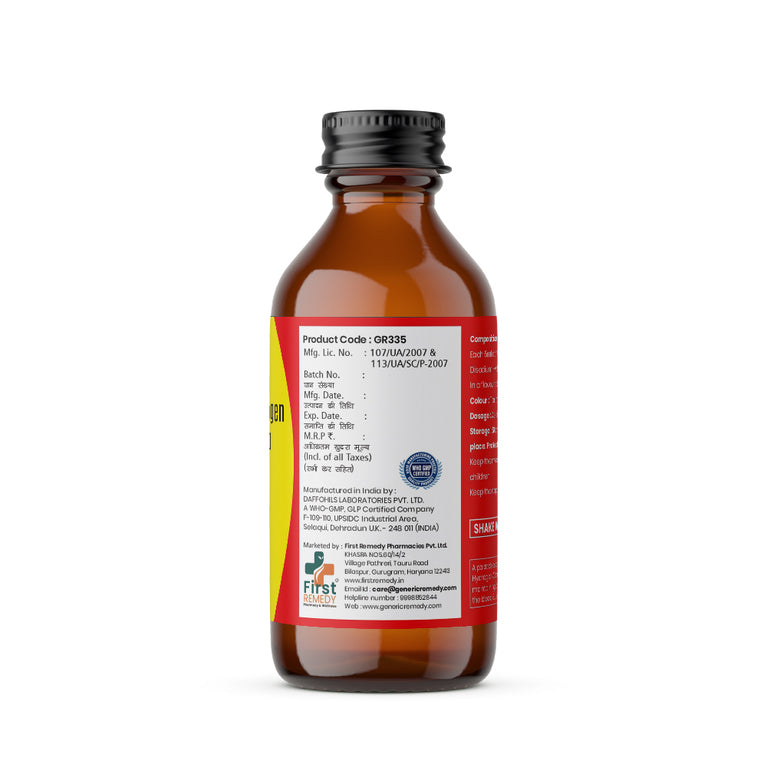
Disodium Hydrogen Citrate Syrup (Alkalyser) Sugar Free 1.4 gm per 5 ml IP is a urinary alkalizer used to treat conditions caused by or made worse by acidic urine. The sugar-free formulation is suitable for individuals with diabetes. It is available with a doctor's prescription.
Uses
Kidney stones: It helps prevent and treat certain types of kidney stones, particularly those made of uric acid. It can also help dissolve smaller, existing stones.
Gout: By lowering uric acid levels in the urine, it can reduce the risk of gout attacks caused by the formation of uric acid crystals in joints.
Urinary tract infections (UTIs): It helps relieve the burning sensation and discomfort associated with UTIs by neutralizing the acidity of the urine.
Renal tubular acidosis (RTA): The syrup helps restore the body's acid-base balance in this condition, where the kidneys fail to properly remove acid from the blood.
Painful urination (dysuria): It can alleviate the irritation and pain caused by acidic urine.
How it works
Disodium Hydrogen Citrate works by increasing the alkalinity (pH) of the urine, which helps address conditions caused by excess urinary acid. This mechanism involves several key steps that occur after the syrup is consumed:
Once ingested orally, the disodium hydrogen citrate is absorbed into the bloodstream.
It is then metabolized, primarily in the liver, into bicarbonate (HCO₃⁻).
The bicarbonate produced during metabolism is then excreted by the kidneys.
This process increases the concentration of free bicarbonate ions in the urine.
The rise in bicarbonate levels neutralizes the acid in the urine, making it less acidic and more alkaline (increasing the pH).
This alkalinization helps alleviate irritation and the burning sensation associated with acidic urine.
Benefits
Increases urine alkalinity to neutralize excess acid, reducing irritation and discomfort.
Helps prevent and dissolve uric acid kidney stones.
Lowers uric acid levels to reduce gout risk.
Provides relief from UTI-related burning and painful urination.
Supports acid-base balance in conditions like renal tubular acidosis.
How to use
Shake the bottle well before each use to ensure the contents are properly mixed.
Measure the correct dose using the measuring cup or spoon provided with the pack. Do not use a regular spoon, as this can lead to an incorrect dosage.
Dilute the measured syrup by mixing it in a full glass of cold water or fruit juice. A glass of 4 to 8 ounces (120 to 240 milliliters) is often recommended.
Take after a meal to prevent stomach irritation and minimize the risk of side effects like nausea and diarrhea.
Drink the entire mixture slowly and follow up with more water or juice unless your doctor directs otherwise.
Drink plenty of fluids throughout the day while taking this medication. This helps prevent kidney stones and stomach upset.
Side Effects
Stomach and gastrointestinal issues: Abdominal discomfort or pain, nausea, vomiting, and diarrhea. Taking the syrup with a meal and plenty of water can help reduce these effects.
Increased urination: The medication acts as a mild diuretic, which may cause a frequent urge to urinate.
Tiredness: Some people may experience fatigue or tiredness.
Mood changes: In some cases, mood changes have been reported.
Unpleasant taste: Some users may experience a change in their sense of taste.
Safety Advice
This medication should not be used in the following conditions. Consult a doctor before use:
Severe kidney problems: Including oliguria (reduced urine), anuria (no urine production), and azotemia (high waste products in the blood).
Addison's disease: An adrenal insufficiency disorder.
Severe heart issues: Such as congestive heart failure or a history of recent, severe myocardial damage.
Conditions involving sodium retention: Including edema, high blood pressure, or toxemia of pregnancy.
Certain electrolyte imbalances: Specifically, hyperkalemia (high potassium) and hypocalcemia (low calcium).
Acute dehydration or heat cramps.
Allergies: To any of the ingredients in the syrup.
Urinary tract infections (UTIs): Consult a doctor first, as the medication can promote bacterial growth in some active UTIs.
Storage Conditions
Store at a temperature below 86°F (30 °C). Protect from light and moisture.
FAQs
What is Disodium Hydrogen Citrate syrup used for?
Disodium Hydrogen Citrate is a urinary alkalizer used to increase the pH level of urine. It is primarily used to treat and prevent:
Kidney stones, particularly those caused by uric acid.
Gout, by lowering uric acid levels in the urine.
Urinary tract infections (UTIs) by help relieve the burning sensation and discomfort.
Renal tubular acidosis (RTA) affects the body's acid-base balance.
Is the sugar-free formula safe for diabetics?
Yes, the sugar-free formulation is specifically designed to be safe for individuals with diabetes. However, it is still advisable to consult a healthcare professional before use.
How long does it take for the syrup to work?
The effects of Disodium Hydrogen Citrate syrup can begin within minutes and typically last for four to six hours. However, the full therapeutic benefit for some conditions may take longer to realize.
Can I take Disodium Hydrogen Citrate on an empty stomach?
Taking the syrup on an empty stomach can cause an upset stomach. It is generally recommended to take it after a meal to minimize gastrointestinal discomfort.
Can I stop taking the medication once I feel better?
No, you should not stop taking the syrup just because your symptoms have improved. The full course of treatment should be completed as prescribed by your doctor to effectively manage the condition and prevent symptoms from returning.
Is it safe to take this syrup if I have a UTI?
You should consult a doctor before taking this medication for a UTI. While it helps relieve symptoms by alkalinizing the urine, this can also promote the growth of some types of bacteria, which may require specific antibiotics for treatment.
Can I take Disodium Hydrogen Citrate with antibiotics?
Disodium Hydrogen Citrate can interact with certain antibiotics, such as tetracyclines. Do not combine any antibiotic medication with this syrup unless explicitly recommended by your doctor.
Are there any potential side effects?
Common side effects include abdominal discomfort, nausea, vomiting, diarrhea, and tiredness. These are usually temporary. For a more complete list, refer to the "Side Effects" section.
What should I do if I miss a dose?
If you miss a dose, take it as soon as you remember. However, if it is almost time for your next dose, skip the missed dose and resume your regular dosing schedule. Do not take a double dose.
 Manufacturer Name:
 Daffohils Laboratories Private Limited
Marketed by: First Remedy Pharmacies Private Limited
The information provided on this website is for general informational purposes only and is not intended as a substitute for professional medical advice, diagnosis, or treatment. Always consult with a physician or qualified healthcare provider for any medical concerns. Never disregard professional advice or delay seeking it based on the information you read here.