Your shopping cart
😊 Product added to cart successfully
Product removed to cart successfully



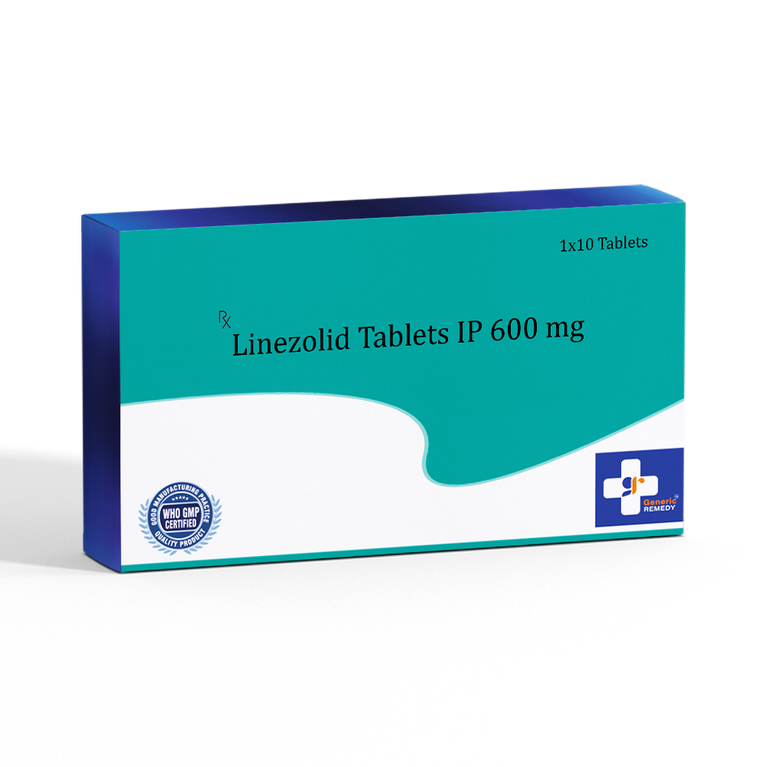
10 tablets in 1 strip
(Inclusive of all taxes)

Prescription Required
Couldn't load pickup availability
Free shipping on orders above ₹300, shipped within 2 days of your order.
Product Description
Linezolid Tablets IP 600 mg is an oral oxazolidinone-class antibiotic for treating serious Gram-positive bacterial infections, including those resistant to vancomycin or other agents. It is indicated for nosocomial pneumonia (e.g., ventilator-associated), community-acquired pneumonia (due to Streptococcus pneumoniae or Staphylococcus aureus), complicated skin and soft tissue infections (cSSTI, including diabetic foot ulcers), and infections caused by vancomycin-resistant Enterococcus (VRE) faecium (including bacteremia). It inhibits bacterial protein synthesis without cross-resistance to other classes. Prescription-only; bacteriostatic (not bactericidal) for most pathogens; reserve for confirmed/suspected resistant infections to minimize resistance.
Use
Treatment of nosocomial or community-acquired pneumonia caused by susceptible Gram-positive bacteria (e.g., methicillin-susceptible/resistant S. aureus [MRSA], S. pneumoniae)
Management of complicated skin and soft tissue infections (cSSTI), including those with bacteremia or diabetic foot infections (e.g., due to MRSA, Streptococcus pyogenes)
Therapy for infections due to vancomycin-resistant Enterococcus faecium (VRE), including bacteremia and endocarditis
Adjunctive or alternative for other Gram-positive infections (e.g., osteomyelitis, septicemia) when susceptibility confirmed
Not indicated for Gram-negative infections, urinary tract infections, or routine prophylaxis; avoid in uncomplicated cases or viral/fungal infections
How it works
Linezolid binds reversibly to the P-site on the 50S subunit of the bacterial ribosome (specifically the 23S rRNA peptidyl transferase center), inhibiting the initiation complex formation:
This prevents peptide bond formation during protein translation, halting synthesis of essential bacterial proteins needed for growth, replication, and virulence.
Selective for bacterial ribosomes (minimal eukaryotic impact at therapeutic doses); effective against multidrug-resistant Gram-positives (e.g., MRSA, VRE) without cross-resistance to beta-lactams, glycopeptides, or macrolides.
Additional effects: Weak MAO inhibition (risk of hypertensive crisis with tyramine) and mitochondrial protein synthesis inhibition (potential for myelosuppression with prolonged use). Onset: Rapid absorption (Tmax 1–2 hours); steady-state in 2–3 days; 100% oral bioavailability.
Benefits
Targeted efficacy: High success rates (80–90% clinical cure in trials like ZEPHYR for MRSA pneumonia) against resistant Gram-positives where alternatives fail; covers VRE/MRSA without nephrotoxicity of vancomycin.
Oral convenience: Equivalent to IV (no dose switch needed), enabling outpatient therapy and reducing hospital stays (e.g., for SSTI).
Renal-friendly: No adjustment required in kidney impairment (non-renal clearance); suitable for elderly or CKD patients.
Broad tissue penetration: Excellent lung/skin/soft tissue distribution; short-course potential (10–14 days) minimizes exposure.
How to use
Take a 600 mg tablet twice daily, as an adult dose. The duration of treatment is often 10 to 14 days, but can be longer depending on the infection. Taking the medication at the same time each day helps maintain a consistent level of the antibiotic in your body. Taking it with food can help prevent stomach upset. Swallow the tablets whole with a glass of water. Do not chew, crush, or break them.
Side Effects
Common side effects (mild, <10% incidence; often GI-related):
Headache, dizziness
Nausea, vomiting, diarrhea (pseudomembranous colitis rare)
Rash, itching
Less common/rare but serious side effects (seek immediate medical attention):
Hematologic: Myelosuppression (thrombocytopenia, anemia, neutropenia—monitor CBC weekly >2 weeks)
Neurologic: Peripheral/optic neuropathy (numbness, vision changes with >28 days of use)
Serotonin syndrome: With serotonergics (agitation, hyperthermia, tremors)
Metabolic: Lactic acidosis (long-term; nausea, weakness), hypertension (tyramine interaction)
Other: Fungal superinfection, seizures (rare)
Side effects are reversible on discontinuation; risk increases with duration >14 days.
Safety Advice
Contraindicated in: Hypersensitivity to oxazolidinones; uncontrolled hypertension; concurrent use with serotonergic agents (e.g., SSRIs, SNRIs, triptans—serotonin syndrome risk).
Use caution in: Bone marrow suppression history (monitor CBC), renal/hepatic disease (though no adjustment, watch for accumulation), phenylketonuria (IV contains aspartame), or the elderly (increased neuropathy). Not for children <12 years unless necessary (weight-based).
Pregnancy/breastfeeding: Category C—limited data (animal teratogenicity); use if benefits outweigh (e.g., life-threatening VRE). Excreted in milk (monitor infant for diarrhea)—prefer alternatives.
Monitoring: Baseline and weekly CBC (platelets >100,000/μL threshold); LFTs, visual acuity (if >3 months); BP with tyramine foods.
Interactions: Serotonergics (syndrome risk—avoid or monitor); sympathomimetics (e.g., pseudoephedrine—hypertension); tyramine-rich foods (>100 mg/meal—hypertensive crisis); rifampin (decreases levels). Avoid alcohol (worsens dizziness; potential disulfiram-like reaction). Inform doctor of all medications/supplements (e.g., St. John's wort).
Lifestyle: Low-tyramine diet (avoid aged cheeses, cured meats, tap beer); report fever/bruising (myelosuppression). Reserve for resistant infections—do not use empirically.
Storage Conditions
Store at a temperature below 86°F (30 °C). Protect from light and moisture.
FAQs
What is Linezolid used for?
Linezolid is a strong antibiotic used to treat serious bacterial infections, especially those caused by bacteria that are resistant to other drugs. It is used for pneumonia, complicated skin and soft tissue infections, and infections caused by resistant bacteria like MRSA and VRE.
What is the typical dosage for Linezolid 600 mg?
For most serious infections, the standard adult dose is one 600 mg tablet every 12 hours. It is important to take it exactly as prescribed by your doctor and to complete the full course of treatment.
How does Linezolid work?
Linezolid works by stopping bacteria from producing the essential proteins they need to grow and multiply. It binds to a specific part of the bacterial ribosome, preventing protein synthesis and stopping the infection.
Can I take Linezolid with food?
Yes, you can take Linezolid tablets with or without food. Taking it with food can help prevent stomach upset.
What foods should I avoid while taking Linezolid?
Since Linezolid is a weak monoamine oxidase inhibitor, you should avoid consuming large quantities of foods and beverages high in tyramine, as this can cause a significant increase in blood pressure. Tyramine-rich foods include:
Aged cheeses (cheddar, parmesan, blue cheese)
Fermented or cured meats (salami, sausages)
Sauerkraut, kimchi, and soy sauce
Tap beers, red wine, and fortified wines
Yeast extracts (Marmite)
What should I do if I miss a dose?
If you miss a dose, take it as soon as you remember. If it is almost time for your next dose, skip the missed one and continue your regular schedule. Do not take a double dose to make up for a missed one.
Is it safe for pregnant or breastfeeding women?
Linezolid is not recommended during pregnancy or breastfeeding unless the potential benefits outweigh the risks, as it can pass into breast milk. You should consult your doctor to discuss this.
How long should I take Linezolid for?
The duration of treatment can range from 10 to 28 days, depending on the severity and type of infection. Your doctor will determine the appropriate length of time for your specific condition.
Can Linezolid affect my vision?
Yes, long-term use (over 28 days) has been linked to vision problems and nerve damage. Report any changes in vision to your doctor immediately.
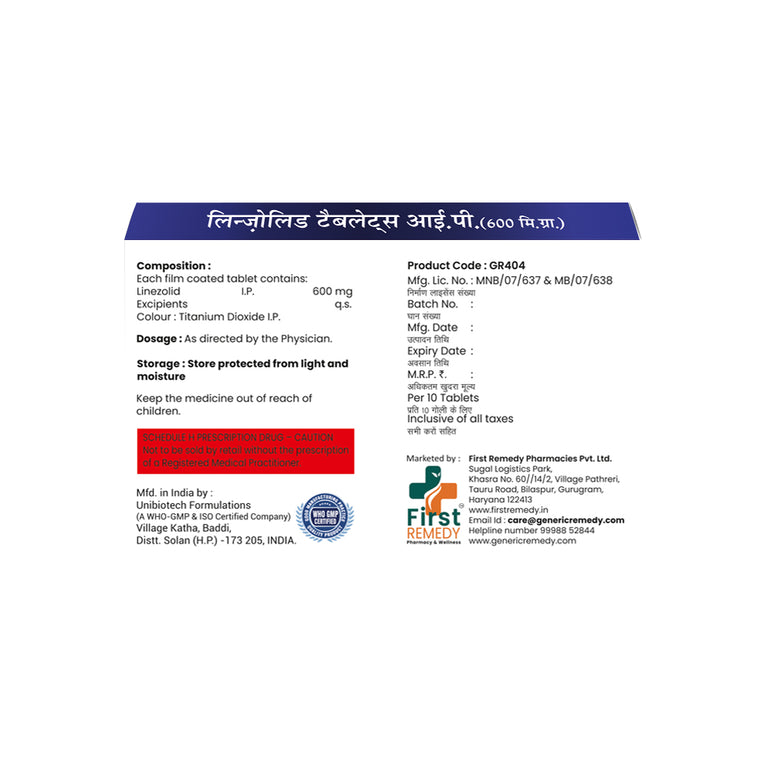
 Manufacturer Name:
 Unibiotech Formulations
Marketed by: First Remedy Pharmacies Private Limited
The information provided on this website is for general informational purposes only and is not intended as a substitute for professional medical advice, diagnosis, or treatment. Always consult with a physician or qualified healthcare provider for any medical concerns. Never disregard professional advice or delay seeking it based on the information you read here.