
Your shopping cart
😊 Product added to cart successfully
Product removed from cart successfully


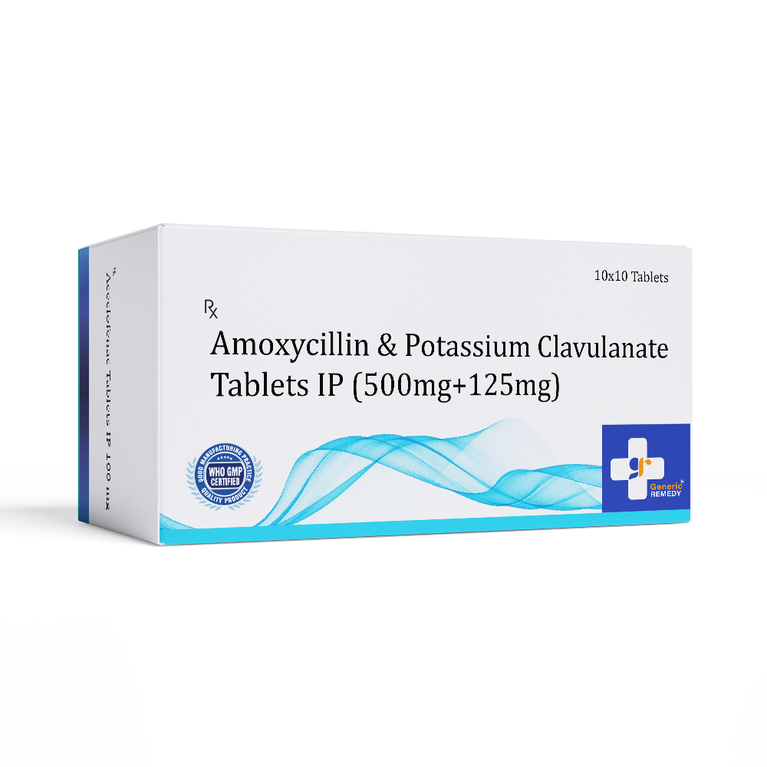
10 tablets in 1 strip
(Inclusive of all taxes)

Prescription Required
Couldn't load pickup availability
Free Shipping on your First Order above ₹199, Delivery within 3–5 days of your order.
Product Description
Amoxycillin is a broad-spectrum antibiotic, and Potassium clavulanate is a beta-lactamase inhibitor. Both are used in combination to get better results in the treatment of various bacterial infections.
This combination of the drug used in the treatment of various bacterial infection like skin infections, respiratory infections, urinary tract infections, nasal sinus infections, and some other bacterial infections. It does not work in viral infections like cold and flu.
It is very crucial to complete the full course advised by the doctor so that all harmful bacteria in the body are killed, and the patient feels better.
It comes in various dosage forms like tablets, chewable tablets, oral suspension, and dry powder for oral use.
Uses
How it works
Amoxycillin works by destroying the bacterial cells or resisting bacterial growth in the body, while clavulanate prevents the bacteria from destroying amoxycillin. Clavulanate also inhibits the beta-lactamase enzyme produced by the bacteria, which provides antibiotic resistance. Clavulanate enhances the effectiveness of amoxicillin.
Benefits
A combination of Amoxycillin and Clavulanate Tablet is used in multiple bacterial infections. It can treat bacterial infections such as ear, sinus, throat, lung, urinary tract, skin, teeth, joints, and bones. You should continue taking it as prescribed even when you feel better to ensure all bacteria are killed and do not become resistant.
How to use
It should be taken after a doctor's consultation for the prescribed complete duration to prevent antibiotic resistance.
It should be used with proper doctor consultation or caution if an individual has liver disease or severe renal dysfunction.
Side Effects
Diarrhoea
Nausea
Skin rashes
Stomach pain
Vomiting
Safety advice
Storage Conditions
FAQs
Are there any specific cautions associated with the use of Amoxycillin & Clavulanate Tablet?
The use of Amoxycillin and Clavulanate Tablet is considered harmful for patients with known allergy to penicillin. It should not be used in patients with a history of liver disease.
Can the use of Amoxycillin and Clavulanate Tablet cause contraceptive failure?
Yes, the use of Amoxycillin and clavulanate tablets can lower the efficacy of birth control pills. Consult your doctor and seek advice.
Can taking this tablet cause jaundice?
Usually, Amoxycillin and clavulanate tablets do not cause jaundice. But sometimes, it can cause jaundice in elderly people who have been taking the medication for a prolonged time. Please consult your doctor immediately if you notice any yellowing of the skin or eyes.
Can taking this tablet cause stomach upset?
Amoxycillin and clavulanate tablets are known to cause stomach upset, indigestion, nausea, and diarrhoea. To avoid these side effects, please take Amoxycillin and clavulanate tablet with a meal. Also, Amoxycillin and clavulanate tablets should be taken at evenly spaced intervals to avoid any unpleasant side effects and for the best results.
 Manufacturer Name:
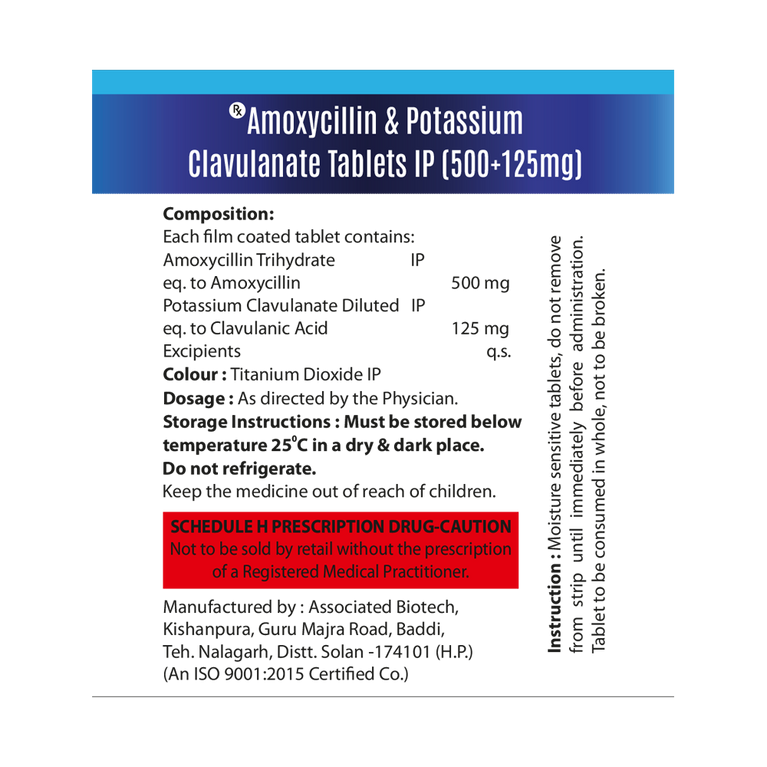
 Associated Biotech
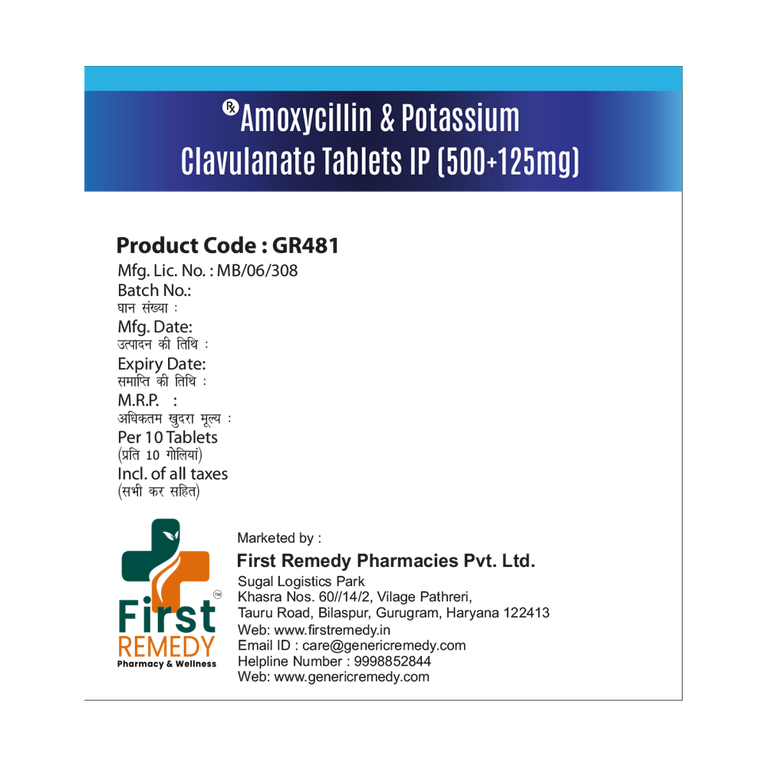
Marketed by: First Remedy Pharmacies Private Limited
The information provided on this website is for general informational purposes only and is not intended as a substitute for professional medical advice, diagnosis, or treatment. Always consult with a physician or qualified healthcare provider for any medical concerns. Never disregard professional advice or delay seeking it based on the information you read here.


 Android
 iOS
iOS