
Your shopping cart
😊 Product added to cart successfully
Product removed from cart successfully
 982 people viewed recently


10 tablets in 1 strip
(Inclusive of all taxes)

Prescription Required
Couldn't load pickup availability
Free Shipping on your First Order above ₹199, Delivery within 3–5 days of your order.


Product Description
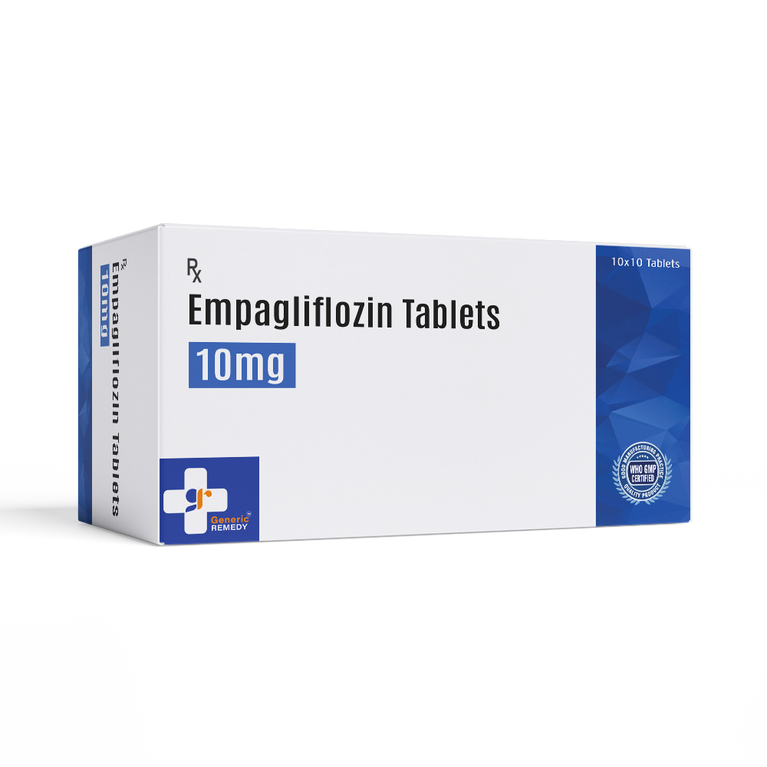
Empagliflozin Tablet 10 mg IP is an oral sodium-glucose co-transporter 2 (SGLT2) inhibitor used to improve glycemic control in adults with type 2 diabetes mellitus (T2DM), reduce cardiovascular (CV) risks in T2DM with established CV disease, lower heart failure (HF) hospitalization in adults with HF (with or without T2DM), and slow chronic kidney disease (CKD) progression in adults with CKD (with or without T2DM).
It selectively inhibits SGLT2 in the proximal renal tubules, promoting urinary glucose excretion (glucosuria) independent of insulin, which lowers blood glucose while providing cardiorenal benefits via natriuresis, reduced preload/afterload, and anti-inflammatory effects. Not indicated for type 1 diabetes, diabetic ketoacidosis (DKA), or insulin-dependent states. Prescription-only; may be used alone or with other antidiabetics (e.g., metformin, insulin).
Uses
Glycemic control in adults with T2DM, as monotherapy or adjunct to diet/exercise/other therapies (e.g., when metformin is insufficient)
Reduction of CV death and HF hospitalization in adults with T2DM and established atherosclerotic CV disease (ASCVD)
Treatment of HF with reduced ejection fraction (HFrEF) or preserved ejection fraction (HFpEF) to reduce hospitalization and CV death, regardless of T2DM status
Slowing CKD progression (e.g., reduce risk of end-stage kidney disease, doubling of creatinine, or CV death) in adults with CKD (eGFR ≥20 mL/min/1.73 m²), with or without T2DM
Not for acute HF decompensation, severe renal impairment (eGFR <20 mL/min), or volume depletion
How it works
Empagliflozin selectively inhibits SGLT2, a transporter responsible for ~90% of renal glucose reabsorption:
In the proximal tubules of the kidneys, SGLT2 normally reabsorbs filtered glucose back into the bloodstream, preventing urinary loss.
By blocking SGLT2, empagliflozin reduces reabsorption, leading to glucosuria (~50–80 g/day glucose excretion, ~200–300 kcal loss) and lowering plasma glucose independently of insulin secretion or sensitivity.
Additional effects: Osmotic diuresis and natriuresis reduce intravascular volume, lowering blood pressure (systolic ~3–5 mmHg) and cardiac workload; promote weight loss (2–4 kg via caloric deficit); shift cardiac metabolism toward ketosis for energy efficiency in HF; and exert anti-fibrotic/anti-inflammatory effects in kidneys.
Onset: Within hours; steady-state effects on HbA1c (~0.7–1% reduction) in 4–8 weeks; 24-hour action with once-daily dosing.
Benefits
Improves glycemic control in T2DM (HbA1c reduction 0.5–1%), with low hypoglycemia risk due to an insulin-independent mechanism.
Reduces CV mortality by 14–38% and HF hospitalization by 30–35% in T2DM with ASCVD or HF patients (per EMPA-REG OUTCOME and EMPEROR trials).
Slows CKD progression by 28–39%, delaying dialysis or transplant needs (EMPA-KIDNEY trial), beneficial for diabetic/non-diabetic kidney disease.
Promotes modest weight loss (2–3 kg sustained) and BP reduction without increasing heart rate, aiding obesity/hypertension management.
Overall cardiorenal protection: Decreases risks of major adverse CV events (MACE), albuminuria, and renal decline, improving long-term outcomes.
How to use
Take one 10 mg tablet once daily in the morning, with or without food, to minimize nocturia (increased urination).
Swallow whole with water; do not crush, chew, break, or split, as this affects absorption.
Dosage: 10 mg for patients needing
Side Effects
Common side effects (usually mild and related to diuresis/glucosuria):
Genitourinary: Urinary tract infections (UTIs—painful/frequent urination, cloudy urine), genital mycotic infections (yeast—itching, redness, discharge in men/women; ~5–10%)
General: Increased urination (polyuria), thirst, dehydration (dry mouth, dizziness)
Other: Back pain, nausea
Rare but serious side effects (seek immediate medical attention):
Euglycemic diabetic ketoacidosis (DKA): Nausea, vomiting, abdominal pain, fatigue (even with normal glucose; higher risk in illness/surgery)
Fournier's gangrene: Severe genital/perineal infection (rare, <0.01%; symptoms: swelling, pain, fever)
Volume depletion: Hypotension, orthostatic dizziness (especially in elderly or on diuretics)
Acute kidney injury: Reduced urine output (in dehydration/renal impairment)
Hypersensitivity: Rash, angioedema, anaphylaxis
Other: Bone fractures (long-term), lower limb amputations (rare, monitor feet)
Maintain hygiene (e.g., dry genital area); hydrate (2–3 L/day); report persistent symptoms.
Safety Advice
Follow doctor's orders: Take exactly as prescribed; do not alter dose, stop, or share without consultation.
Hydration: Drink plenty of fluids to prevent dehydration from increased urination; monitor in hot weather, exercise, or illness.
Monitoring: Regular checks of renal function (eGFR every 3–6 months), electrolytes, and signs of DKA (e.g., ketones in urine/blood during stress). For HF/CKD, track weight/fluid status.
Contraindicated in: Severe renal impairment (eGFR <20 mL/min), end-stage renal disease on dialysis, active DKA, type 1 diabetes, or hypersensitivity.
Caution in: Mild-moderate renal impairment (eGFR 20–45 mL/min—dose adjust), hepatic disease, elderly (>75 years—increased dehydration risk), or concurrent diuretics/insulin (hypotension/hypoglycemia). Not for children.
Pregnancy/breastfeeding: Category D (fetal renal harm; avoid in 2nd/3rd trimesters); use contraception if childbearing. Limited data in breastfeeding—avoid or pump/discard milk.
Interactions: Increases DKA risk with insulin/sulfonylureas (reduce dose); diuretics/NSAIDs worsen dehydration/renal effects; UGT inducers (e.g., rifampin) reduce efficacy. Inform the doctor of all medications/supplements. Limit alcohol (increases DKA/dehydration).
Lifestyle: Low-carb/ketogenic diets may heighten DKA risk; inspect feet daily for infections/amputations. Promptly treat UTIs/genital infections.
Storage Conditions
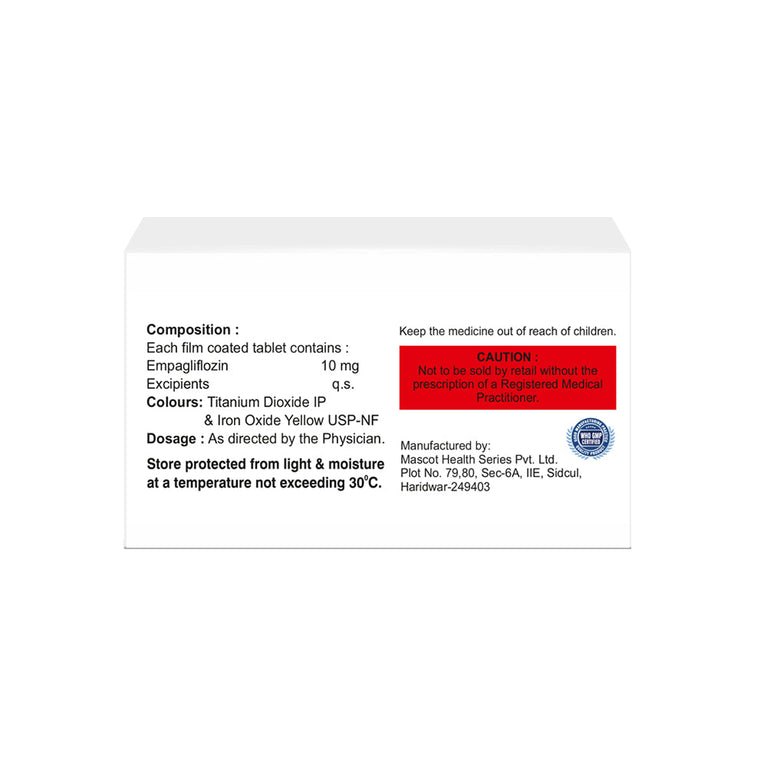
Store at a temperature below 86°F (30 °C). Protect from light and moisture.
FAQs
What is Empagliflozin used for?
Empagliflozin is used to treat type 2 diabetes, heart failure, and chronic kidney disease in adults.
How does Empagliflozin work?
It blocks a protein in the kidneys (SGLT2), preventing reabsorption of glucose and causing it to be excreted through urine. This lowers blood sugar and has other benefits.
Is Empagliflozin used for type 1 diabetes?
No, it is not used for type 1 diabetes or for treating diabetic ketoacidosis.
How long does it take for Empagliflozin to work?
While the blood sugar-lowering effect happens quickly, it may take weeks or months to notice changes in symptoms for conditions like heart failure or chronic kidney disease.
What should I do if I miss a dose?
Take the missed dose as soon as remembered. If it is almost time for the next dose, skip the missed dose. Do not double the dose.
Can I stop taking Empagliflozin on my own?
Do not stop taking the medication without consulting a doctor, even if you feel well, as this can cause blood sugar to rise.
What are the common side effects of Empagliflozin?
Common side effects include genital yeast infections, urinary tract infections, increased urination, increased thirst, and a stuffy or runny nose.
What about low blood sugar (hypoglycemia)?
The risk of low blood sugar is low when Empagliflozin is used alone. The risk increases if taken with other diabetes medications like insulin.
Should I avoid alcohol while taking Empagliflozin?
Limit or avoid alcohol consumption, as it can increase the risk of low blood sugar and diabetic ketoacidosis.
Does Empagliflozin interact with other medications?
It can interact with diuretics and other diabetes medications. Always inform a doctor about all medicines and supplements taken.
Should I be careful with specific activities while taking Empagliflozin?
Be cautious when driving or operating machinery, especially when starting the medication, as it can cause dizziness and increase the risk of fainting.
Is Empagliflozin safe for pregnant or breastfeeding women?
It is not recommended during the second and third trimesters of pregnancy and while breastfeeding.
What if I have kidney or liver problems?
Empagliflozin is not recommended for severe kidney impairment. A doctor will monitor kidney and liver function.
 Manufacturer Name:
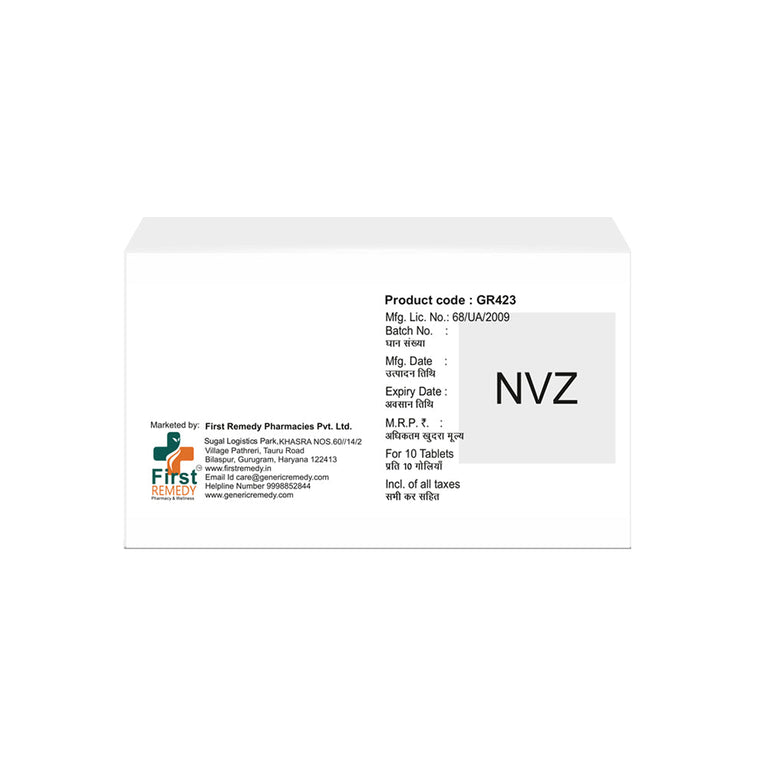
 Mascot Health Series Private Limited
Marketed by: First Remedy Pharmacies Private Limited
The information provided on this website is for general informational purposes only and is not intended as a substitute for professional medical advice, diagnosis, or treatment. Always consult with a physician or qualified healthcare provider for any medical concerns. Never disregard professional advice or delay seeking it based on the information you read here.


 Android
 iOS
iOS