
Your shopping cart
😊 Product added to cart successfully
Product removed from cart successfully


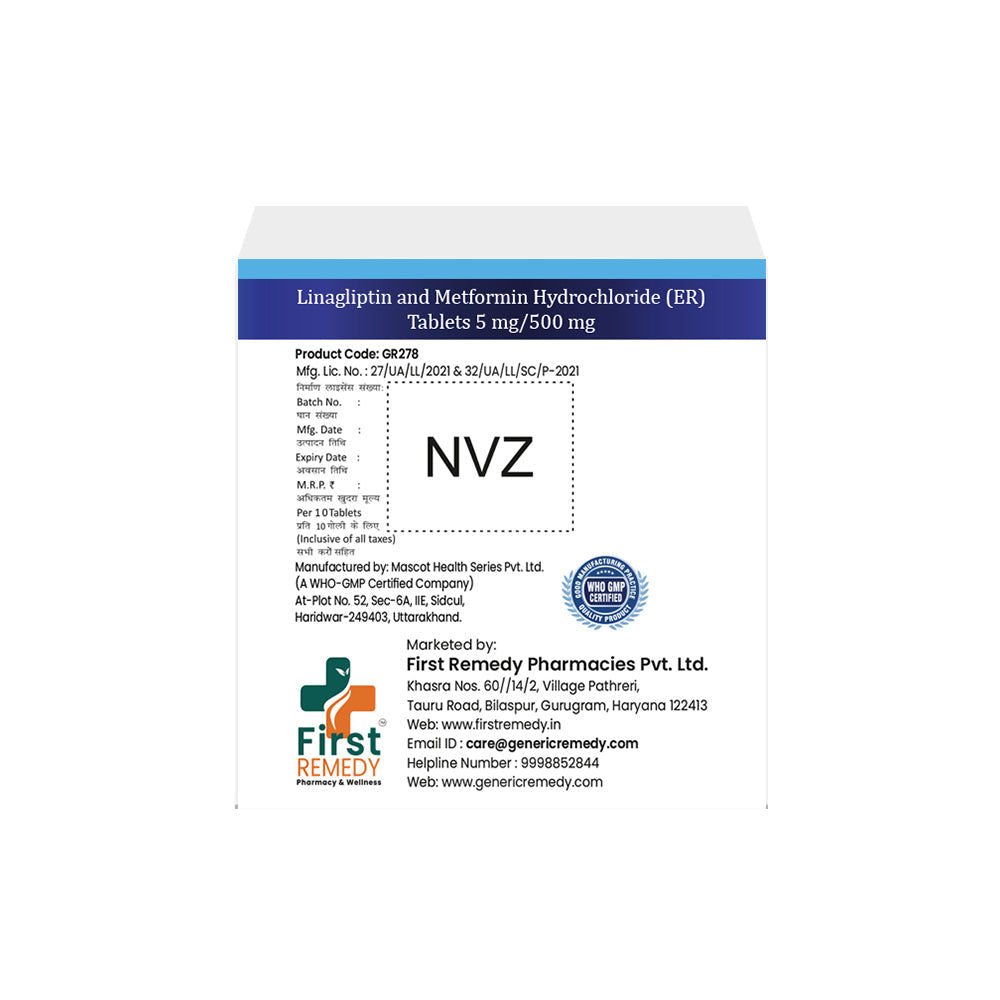
10 tablets in 1 strip
(Inclusive of all taxes)

Prescription Required
Couldn't load pickup availability
Free Shipping on your First Order above ₹199, Delivery within 3–5 days of your order.


Product Description
Linagliptin 5 mg & Metformin 500 mg E.R. Tablet IP is a fixed-dose combination oral antidiabetic medication for adults with type 2 diabetes mellitus (T2DM). It combines linagliptin, a dipeptidyl peptidase-4 (DPP-4) inhibitor, which enhances incretin effects to increase insulin secretion and decrease glucagon release in a glucose-dependent manner, with metformin extended-release (E.R.), a biguanide that reduces hepatic glucose production and improves insulin sensitivity. This dual therapy provides better glycemic control than either agent alone in many patients, especially when diet and exercise are insufficient. The E.R. formulation allows once-daily dosing with sustained metformin release to minimize gastrointestinal side effects. T2DM occurs when the pancreas produces insufficient insulin or the body becomes resistant to it, leading to elevated blood glucose levels.
Uses
Improvement of glycemic control in adults with type 2 diabetes mellitus, as an adjunct to diet and exercise
Management of hyperglycemia when monotherapy with metformin or linagliptin is inadequate
Not indicated for type 1 diabetes, diabetic ketoacidosis, or patients with severe renal impairment
How it works
This combination targets multiple pathways in glucose homeostasis:
Linagliptin (5 mg): Inhibits DPP-4 enzyme, prolonging the action of incretin hormones (e.g., GLP-1, GIP). This stimulates glucose-dependent insulin release from pancreatic beta cells and suppresses glucagon secretion from alpha cells, reducing postprandial hyperglycemia without increasing hypoglycemia risk.
Metformin E.R. (1000 mg): Decreases gluconeogenesis and glycogenolysis in the liver, enhances insulin-mediated glucose uptake in peripheral tissues (e.g., muscle), and may improve gut glucose utilization. The extended-release matrix allows gradual absorption in the upper GI tract, providing 24-hour control and reducing peak plasma levels to lower GI intolerance.
Together, they lower fasting and postprandial blood glucose, with complementary mechanisms for synergistic HbA1c reduction (typically 1–1.5% over monotherapy).
Benefits
Achieves superior glycemic control (e.g., greater HbA1c reduction) compared to individual components, helping maintain target blood sugar levels.
Reduces post-meal glucose spikes (linagliptin) and fasting hyperglycemia (metformin), supporting long-term diabetes management.
Low risk of hypoglycemia when used without sulfonylureas or insulin.
Weight-neutral or promoting modest weight loss (due to metformin), beneficial for overweight T2DM patients.
Decreases risk of microvascular complications (e.g., retinopathy, nephropathy) with sustained use alongside lifestyle changes.
How to use
This is an extended-release (E.R.) tablet, meaning it is designed to release medication slowly over time. Do not crush, chew, or break the tablet, as this would cause the medication to be released too quickly and could increase the risk of side effects. To reduce the gastrointestinal side effects often associated with metformin, such as nausea and stomach upset, it is recommended to take this medication with a meal.
Side effects
Common side effects (often mild and transient, related to metformin):
Gastrointestinal: diarrhea, nausea, vomiting, abdominal pain, flatulence, indigestion
Upper respiratory tract infection (e.g., sore throat, runny nose—from linagliptin)
Headache
Rare but serious side effects (seek immediate medical attention):
Lactic acidosis (metformin-related): Symptoms include muscle pain, weakness, breathing difficulty, drowsiness, hypothermia—risk is higher in renal/hepatic impairment, dehydration, or alcohol use
Hypoglycemia: Uncommon alone but possible with other antidiabetics (symptoms: dizziness, sweating, hunger, tremor)
Pancreatitis (linagliptin-related): Severe abdominal pain, nausea
Allergic reactions: rash, itching, swelling
Other: Vitamin B12 deficiency (long-term metformin use), heart failure exacerbation
Report persistent symptoms to your doctor for dose adjustment.
Safety advice
Contraindicated in: severe renal impairment (eGFR <30 mL/min), acute/chronic heart failure, metabolic acidosis, or hypersensitivity to components.
Use caution in: mild-moderate renal impairment (monitor eGFR; may need dose reduction), liver disease, elderly (>65 years), heavy alcohol users (increases lactic acidosis risk), or dehydration-prone states (e.g., fever, surgery).
Do not stop abruptly without medical advice—may worsen hyperglycemia and complications (e.g., retinopathy, neuropathy).
Pregnancy/breastfeeding: Category C (linagliptin)/D (metformin); use only if benefits outweigh risks—switch to insulin if needed. Inform the doctor if planning pregnancy.
Monitor: Renal function (eGFR annually or more), vitamin B12 levels (every 2–3 years), and signs of lactic acidosis. Avoid excessive alcohol.
Interactions: May interact with drugs like diuretics (dehydration risk), corticosteroids (hyperglycemia), or CYP3A4 inducers (reduce linagliptin efficacy). Inform your doctor of all medications/supplements.
Storage Conditions
Store at a temperature below 86°F (30 °C). Protect from light and moisture.
FAQs
Can this medication cause hypoglycemia (low blood sugar)?
Yes, this medication can cause low blood sugar, especially when combined with other diabetes medications like insulin or sulfonylureas. However, both linagliptin and metformin have a lower risk of causing hypoglycemia when used alone compared to some other diabetes medications. Symptoms include dizziness, sweating, hunger pangs, and a fast heartbeat. It's recommended to carry a source of quick-acting sugar, like glucose tablets or juice, to treat low blood sugar episodes.
Is this medication for Type 1 diabetes?
No, this medication is only for adults with Type 2 diabetes. It is not effective for and should not be used to treat Type 1 diabetes or diabetic ketoacidosis.
Can alcohol be consumed while taking this medication?
Alcohol should be avoided or limited, especially excessive drinking, while taking this medication. This is because it increases the risk of lactic acidosis, a serious side effect of metformin. Alcohol can also affect blood sugar levels.
Is weight gain a side effect of this medication?
This medication is generally weight-neutral. Neither linagliptin nor metformin typically causes significant weight gain.
What if an empty tablet shell is seen in the stool?
Seeing an empty tablet shell in the stool is normal for this extended-release tablet. The medication is released from the shell, which then passes through your system. This does not mean the medication was ineffective.
Can this medication cause a vitamin B12 deficiency?
Long-term use of metformin can potentially lead to a vitamin B12 deficiency by decreasing absorption. A doctor might suggest monitoring B12 levels.
What is the best time to take the tablet?
This extended-release tablet is typically taken once daily. Taking it with food can help reduce stomach upset from metformin.
What if a dose is missed?
If a dose is missed, take it when remembered, unless it is nearly time for the next dose. If that's the case, skip the missed dose and continue with the regular schedule. Do not take a double dose.
 Manufacturer Name:
 Mascot Health Series Private Limited
Marketed by: First Remedy Pharmacies Private Limited
The information provided on this website is for general informational purposes only and is not intended as a substitute for professional medical advice, diagnosis, or treatment. Always consult with a physician or qualified healthcare provider for any medical concerns. Never disregard professional advice or delay seeking it based on the information you read here.


 Android
 iOS
iOS