
Your shopping cart
😊 Product added to cart successfully
Product removed from cart successfully
 982 people viewed recently


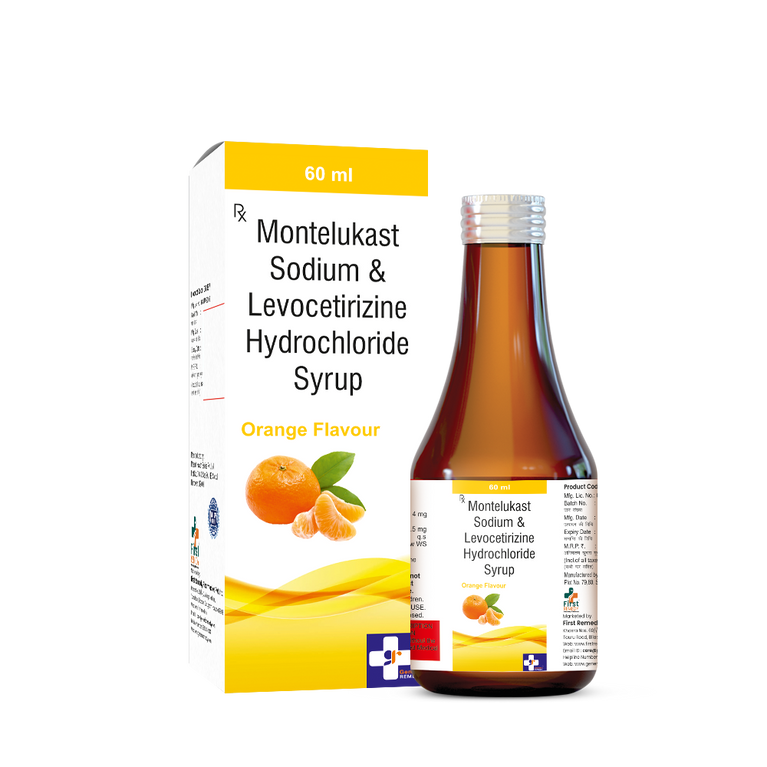
60ml in 1 bottle
(Inclusive of all taxes)

Prescription Required
Couldn't load pickup availability
Free Shipping on your First Order above ₹199, Delivery within 3–5 days of your order.


Product Description
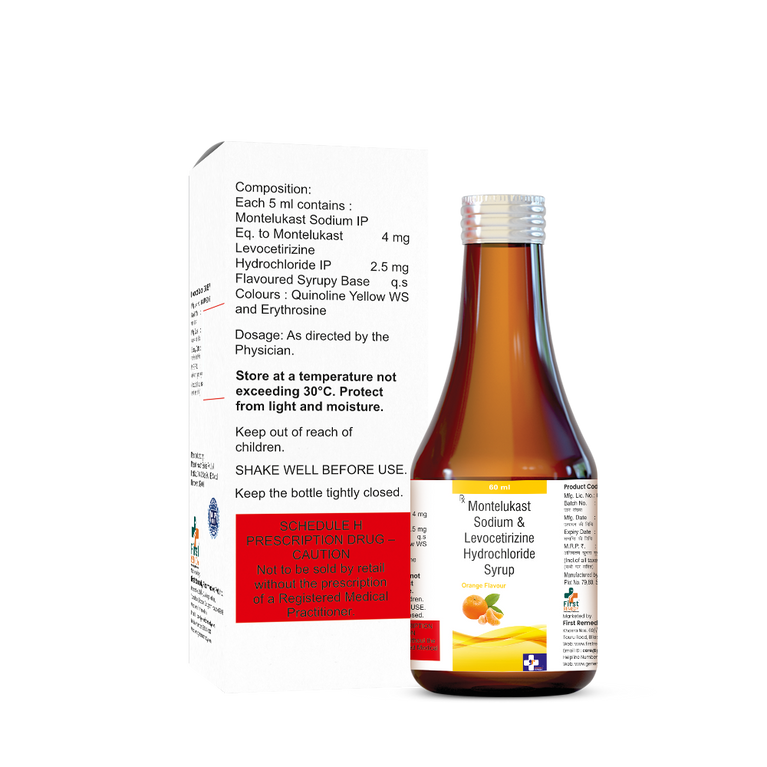
Montelukast 4 mg and Levocetirizine 2.5 mg Syrup 60 ml IP is a pediatric oral suspension combining two active ingredients for managing allergic and respiratory conditions in children (typically ages 2–5 years, based on dosing). Montelukast is a leukotriene receptor antagonist that reduces airway inflammation and bronchoconstriction. Levocetirizine is a second-generation antihistamine that blocks histamine H1 receptors to alleviate allergic symptoms. This combination provides dual-action relief for seasonal/perennial allergic rhinitis (hay fever), mild persistent asthma, and urticaria (hives), but it is not for acute asthma attacks or severe exacerbations.
Uses
Management of seasonal and perennial allergic rhinitis (symptoms: sneezing, runny/itchy nose, watery eyes, nasal congestion)
Long-term control of mild persistent asthma (symptoms: wheezing, coughing, chest tightness) in children
Relief of allergic skin conditions such as chronic urticaria (itching, redness, swelling)
Prevention of exercise-induced bronchoconstriction (in asthma patients)
Not indicated for acute asthma attacks, common colds, or infections
How it works
This syrup combines complementary mechanisms for comprehensive allergy and asthma control:
Levocetirizine (2.5 mg): A non-sedating antihistamine that competitively blocks histamine H1 receptors on target cells (e.g., in the nose, eyes, skin). Histamine is released during allergic reactions, causing symptoms like itching, sneezing, and rhinorrhea. By inhibiting this, it rapidly relieves acute allergic symptoms without significant central nervous system penetration.
Montelukast (4 mg): A selective antagonist of cysteinyl leukotriene receptors (CysLT1), blocking leukotrienes (inflammatory mediators produced by mast cells and eosinophils). This reduces airway edema, smooth muscle contraction, and mucus production, improving airflow and preventing inflammation in the airways and nasal passages.
The syrup form ensures easy administration and absorption in children, with effects starting within 1–2 hours for levocetirizine and up to 12–24 hours for montelukast.
Benefits
Provides rapid and sustained relief from allergic rhinitis symptoms, improving daily comfort and sleep quality.
Helps control mild asthma by reducing inflammation and preventing nighttime symptoms or exercise-induced issues.
Alleviates urticaria-related itching and swelling, reducing skin discomfort.
Dual action targets both histamine- and leukotriene-mediated pathways for better overall management than monotherapy.
Pediatric-friendly formulation supports adherence in children, potentially reducing reliance on rescue inhalers.
How to use
Shake the bottle well before each use to ensure uniform suspension.
Administer orally once daily (typically 5 ml, providing 4 mg montelukast and 2.5 mg levocetirizine) in the evening, with or without food, using the provided measuring cup, spoon, or oral syringe for accuracy. Avoid household spoons.
Dosage is age/weight-based: Suitable for children 2–5 years (or >10 kg); consult a pediatrician for exact dosing. Not recommended for children under 2 years without medical advice.
Continue as prescribed even if symptoms improve; do not use for acute attacks (use a rescue inhaler if prescribed).
If vomiting occurs within 30 minutes of dosing, repeat the dose; otherwise, skip and resume the next scheduled dose.
Side Effects
Common side effects (usually mild and transient):
From Levocetirizine: drowsiness, fatigue, dry mouth, headache, abdominal pain, nausea, vomiting, diarrhea
From Montelukast: upper respiratory infection symptoms (e.g., sore throat, cough), fever
Serious but rare side effects (seek immediate medical attention):
Neuropsychiatric (primarily montelukast): agitation, aggression, anxiety, depression, irritability, nightmares, sleep disturbances, hallucinations, suicidal thoughts (FDA boxed warning—monitor closely in children)
Allergic reactions: rash, hives, swelling of face/lips/tongue, difficulty breathing
Other: nasal congestion, ear infection, increased liver enzymes (rare)
Discontinue and consult a doctor if behavioral changes or persistent symptoms occur.
Safety Advice
Use only under pediatrician supervision; inform the doctor of any kidney/liver impairment (contraindicated in severe renal failure; dose adjustment may be needed for moderate cases).
Monitor for neuropsychiatric effects, especially in children—report mood/behavior changes immediately and stop use if severe.
Avoid in patients with hypersensitivity to either component or phenylketonuria (if aspartame-containing).
Not for acute asthma; always have a rescue bronchodilator available.
Limit alcohol/sedatives (may enhance drowsiness from levocetirizine). Safe in pregnancy/breastfeeding only if benefits outweigh risks (Category B for both).
Interactions: May interact with phenobarbital, rifampin (reduce montelukast efficacy), or sedatives (increase drowsiness). Inform the doctor of all medications.
Storage Conditions
Store at a temperature below 86°F (30 °C). Protect from light and moisture.
FAQs
How is this syrup typically used?
This syrup is generally prescribed for children with allergic rhinitis, asthma, and chronic urticaria. It is usually taken orally once a day, typically in the evening, with or without food. Always use a measuring cup or syringe to ensure the correct dosage.
Why is it often taken in the evening?
The montelukast component is often recommended to be taken in the evening because it helps manage the symptoms that tend to worsen at night, such as coughing and wheezing from asthma.
What should you do if a dose is missed?
If a dose is missed, administer it as soon as remembered. However, if the next dose is soon, skip the missed dose and continue with the regular schedule. Do not double the dose to make up for a missed one.
Can you stop the medication when symptoms improve?
Do not stop this medication without consulting a doctor, even if symptoms improve. Stopping prematurely can cause allergy or asthma symptoms to return.
Can this syrup be used for a fever or a common cold?
No, this syrup does not reduce a general fever. It is an anti-allergic medication and should not treat common cold symptoms.
Is it safe for children?
Yes, this syrup is often prescribed to children for allergies and asthma. However, a pediatrician should determine the dose based on the child's age, weight, and condition. It is not recommended for children under two years of age unless a doctor advises it.
What are the storage instructions?
Store the syrup in a cool, dry, and dark place at room temperature, away from direct sunlight and moisture. Keep it out of the sight and reach of children.
What if my child has liver or kidney problems?
Inform your doctor if your child has a history of kidney or liver problems. The syrup should be used cautiously and may require a dosage adjustment, especially for severe kidney issues.
What should you do if your child vomits after taking the dose?
If your child vomits within 30 minutes of taking the syrup, give the same dose again. If more time has passed, do not repeat the dose and wait for the next scheduled dose.
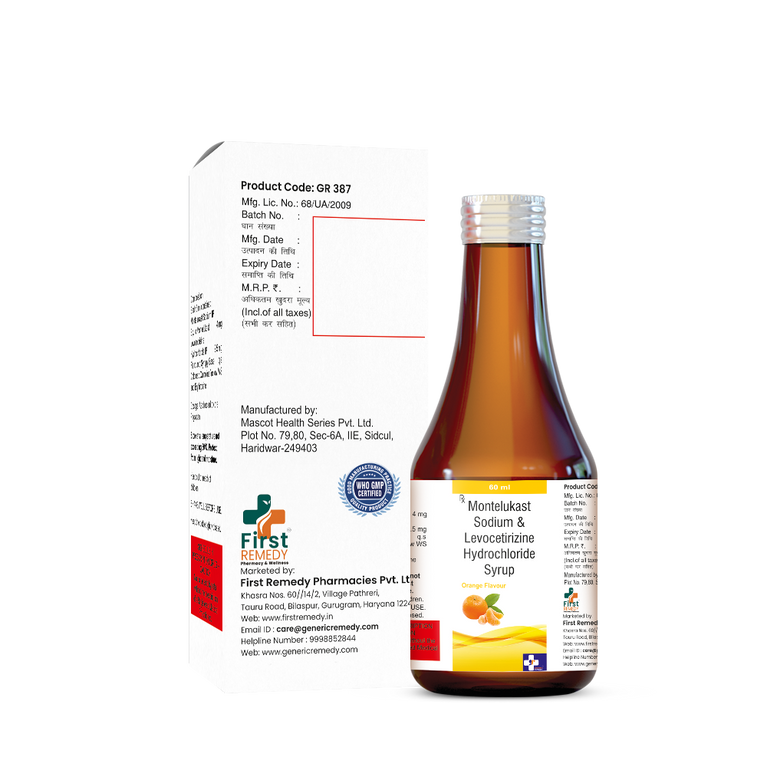
 Manufacturer Name:
 Mascot Health Series Private Limited
Marketed by: First Remedy Pharmacies Private Limited
The information provided on this website is for general informational purposes only and is not intended as a substitute for professional medical advice, diagnosis, or treatment. Always consult with a physician or qualified healthcare provider for any medical concerns. Never disregard professional advice or delay seeking it based on the information you read here.


 Android
 iOS
iOS