Your shopping cart
😊 Product added to cart successfully
Product removed to cart successfully



10 tablets in 1 strip
(Inclusive of all taxes)

Prescription Required
Couldn't load pickup availability
Free shipping on orders above ₹300, shipped within 2 days of your order.
Product Description
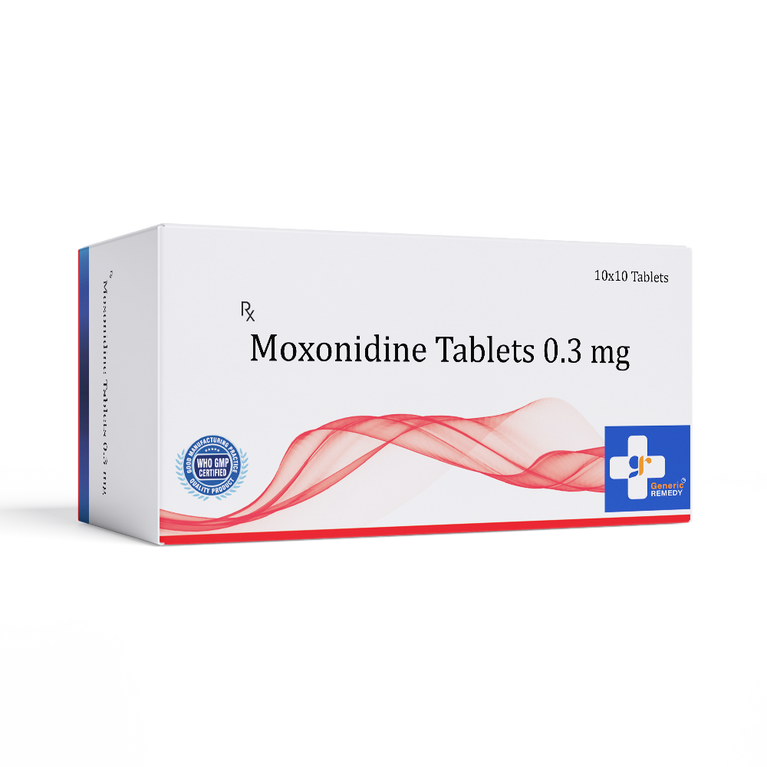
Moxonidine Tablets 0.3 mg IP is a centrally acting antihypertensive agent for the treatment of mild-to-moderate essential hypertension in adults. As a selective imidazoline I1-receptor agonist, it reduces sympathetic outflow from the brainstem, leading to vasodilation, decreased peripheral resistance, and lower blood pressure (BP) without significant alpha-2 adrenergic effects (reducing sedation compared to clonidine). It may offer additional benefits like improved insulin sensitivity and endothelial function in metabolic syndrome, reducing cardiovascular risks (e.g., stroke, heart attack) by 15–25% in long-term use. Prescription-only; not for secondary hypertension or as a first-line in all patients.
Uses
Management of mild-to-moderate essential hypertension (systolic/diastolic BP 140–179/90–109 mmHg) as monotherapy or adjunctive therapy
BP control in patients intolerant to or unresponsive to other agents (e.g., beta-blockers, ACEIs, CCBs)
Reduction of associated risks: Stroke, myocardial infarction, heart failure, and renal damage through sustained BP lowering
Not indicated for severe hypertension (BP >180/110 mmHg), pheochromocytoma, or in children (<18 years; safety unestablished)
How it works
Moxonidine selectively stimulates I1-imidazoline receptors in the rostral ventrolateral medulla (brainstem), a key regulator of sympathetic tone:
This inhibits norepinephrine release and central sympathetic outflow to the periphery, reducing heart rate, cardiac output, and vascular tone.
Result: Vasodilation, decreased total peripheral resistance, and BP reduction (systolic/diastolic drop ~10–15 mmHg at 0.2–0.4 mg doses).
Unlike non-selective alpha-2 agonists (e.g., clonidine), it has minimal sedation and dry mouth due to lower alpha-2 affinity. It also improves insulin sensitivity (by 10–20% in trials) and endothelial function, beneficial for patients with metabolic syndrome or diabetes. Onset: 1 hour; peak 3 hours; duration 24 hours for once-daily dosing.
Benefits
Effective BP control: Achieves target BP (<140/90 mmHg) in 50–70% of patients as monotherapy (per MOXCON trial), with 24-hour efficacy suitable for once-daily use.
Favorable metabolic profile: Enhances insulin sensitivity and glucose tolerance without worsening lipids, ideal for hypertensive patients with obesity or prediabetes (reduces new-onset diabetes risk by ~20%).
Cardiovascular protection: Lowers stroke/heart event rates; improves endothelial function for better vascular health.
Better tolerability: Less rebound hypertension or sedation than older central agents; supports adherence in the elderly or those with comorbidities.
How to use
You should take Moxonidine 0.3mg exactly as directed by your doctor. The specific dosage and frequency depend on your individual health condition. You should never stop taking this medication abruptly without consulting your doctor. Swallow the tablet whole with a glass of water/ with or without food, as food does not affect its absorption, and do not chew, crush, or break it.
Side Effects
Common side effects (mild, often resolve in 1–2 weeks; <10% incidence):
Dry mouth (most frequent, manage with sugar-free gum)
Dizziness, headache, fatigue/weakness
Gastrointestinal: Nausea, indigestion
Sleep disturbances: Insomnia or somnolence
Musculoskeletal: Back pain
Less common/rare but serious side effects (seek immediate medical attention):
Cardiovascular: Bradycardia (slow heart rate), hypotension (dizziness/fainting), Raynaud's phenomenon
Neurological: Asthenia, paresthesia
Allergic: Rash, pruritus
Other: Peripheral edema; rare QT prolongation
Report persistent dry mouth or dizziness; dose reduction may help.
Safety Advice
Never stop taking Moxonidine suddenly without your doctor's guidance. An abrupt stop can cause withdrawal symptoms like agitation, headaches, and a dangerous, rapid rise in blood pressure. Avoid drinking alcohol while taking Moxonidine, as it can increase the sedative and blood pressure-lowering effects. Moxonidine can cause dizziness and drowsiness. You should not drive or operate heavy machinery until you are aware of how the medication affects you.
Storage Conditions
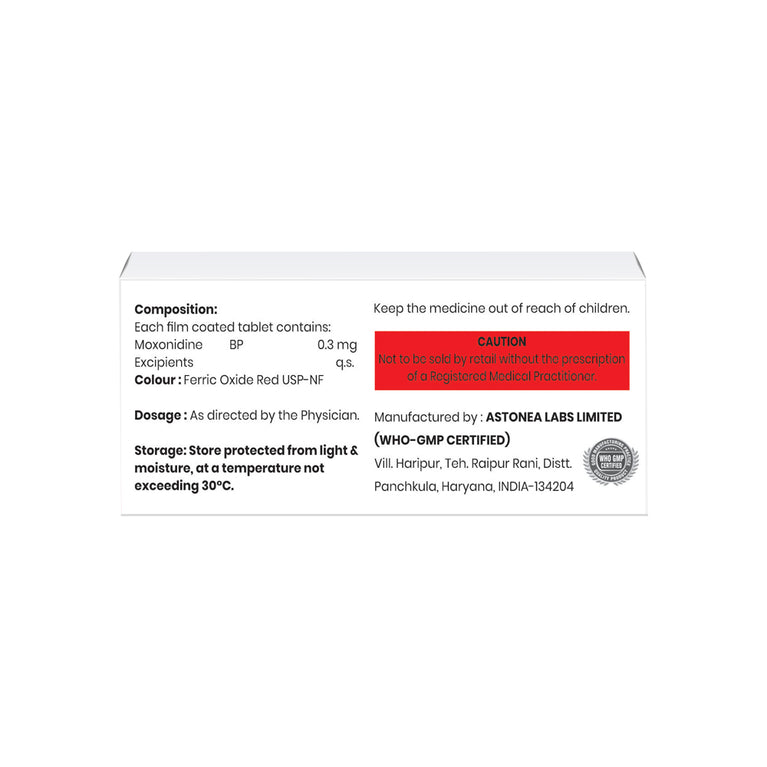
Store at a temperature below 86°F (30 °C). Protect from light and moisture.
FAQs
How long does it take for Moxonidine 0.3 mg to work?
You may notice a reduction in blood pressure within a few hours of taking Moxonidine 0.3 mg. However, it may take a few weeks of regular use to experience the full effect of the medication.
Can I stop taking Moxonidine 0.3 when my blood pressure is normal?
No, you should never stop taking Moxonidine 0.3 mg abruptly without consulting your doctor. Suddenly stopping the medication can cause a serious and rapid increase in your blood pressure. Your doctor will advise you on a safe withdrawal plan, which typically involves gradually reducing the dosage.
Is Moxonidine 0.3 mg safe for long-term use?
Yes, Moxonidine 0.3 mg is generally considered safe for long-term use as prescribed by a doctor, with regular check-ups and monitoring recommended
Moxonidine can be used alone or with other blood pressure medications, but inform your doctor about all medications you take to avoid interactions or increased effects.
What should I do if I miss a dose?
Take a missed dose as soon as you remember, unless it's nearly time for the next dose, in which case you should skip the missed one. Do not take a double dose.
Does Moxonidine 0.3 mg cause dizziness?
Dizziness and drowsiness are common side effects. Be cautious when driving or operating machinery until you know how the medication affects you, and stand up slowly to help reduce lightheadedness.
What are the symptoms of an overdose?
Symptoms of overdose may include headache, drowsiness, low blood pressure, dizziness, unusual weakness, and a slow heart rate. Contact a doctor or emergency services immediately if you suspect an overdose.
 Manufacturer Name:
 Astonea Labs Limited
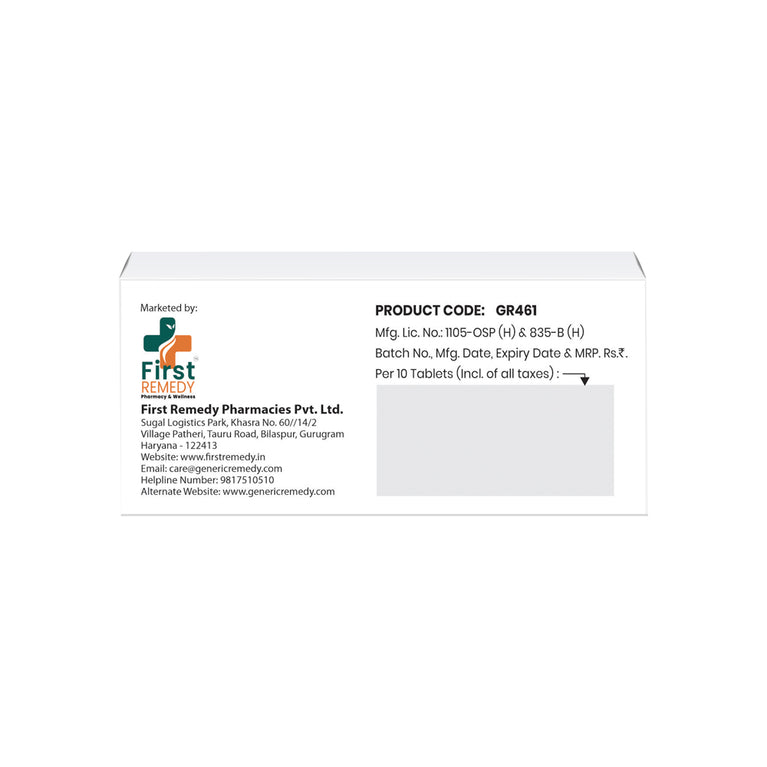
Marketed by: First Remedy Pharmacies Private Limited
The information provided on this website is for general informational purposes only and is not intended as a substitute for professional medical advice, diagnosis, or treatment. Always consult with a physician or qualified healthcare provider for any medical concerns. Never disregard professional advice or delay seeking it based on the information you read here.