Product Description
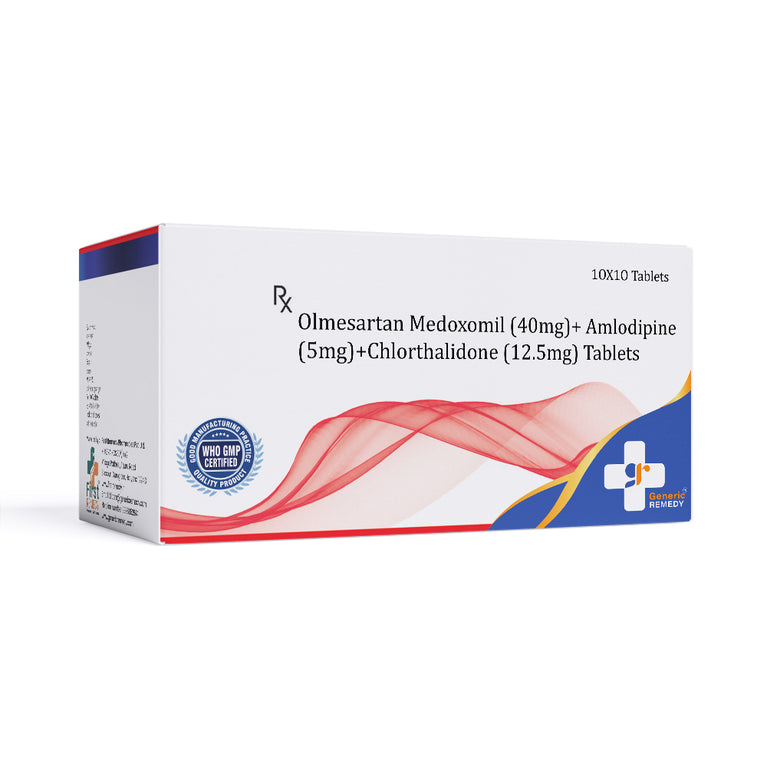
This tablet combines three medicines that lower blood pressure through different mechanisms. Olmesartan blocks the effects of angiotensin II, amlodipine relaxes arterial smooth muscle, and chlorthalidone increases the excretion of sodium and water.
Using three mechanisms in one tablet can be useful when hypertension requires more than one medicine. It also means kidney function, blood pressure, and electrolyte levels may need periodic review.
Uses
Used for high blood pressure when treatment with more than one antihypertensive medicine is required.
How It Works
Olmesartan blocks AT1 receptors, reducing angiotensin II-mediated blood-vessel constriction and aldosterone-related sodium retention.
Amlodipine reduces calcium entry into vascular smooth muscle, allowing the arteries to relax.
Chlorthalidone promotes sodium and water excretion through the kidneys. Together, these effects reduce vascular resistance and circulating fluid volume.
How to Use
Benefits
-
Lowers blood pressure through three separate mechanisms.
-
Reduces angiotensin II-mediated vasoconstriction.
-
Adds the fluid-lowering effect of chlorthalidone.
-
Places three prescribed antihypertensive medicines in one tablet.
Side Effects
Chlorthalidone can lower sodium or potassium and may raise uric acid. Amlodipine can cause ankle swelling. Dehydration can make dizziness and kidney problems more likely.
Safety Advice
-
Tell your doctor if you have kidney or liver disease, diabetes, gout, or previous electrolyte problems.
-
Blood tests may be used to check kidney function, sodium, and potassium.
-
Rise slowly if you feel dizzy.
-
Do not add potassium supplements or other blood-pressure medicines without medical advice.
-
Tell your doctor if you develop repeated vomiting or diarrhoea, particularly if you cannot maintain normal fluid intake.
-
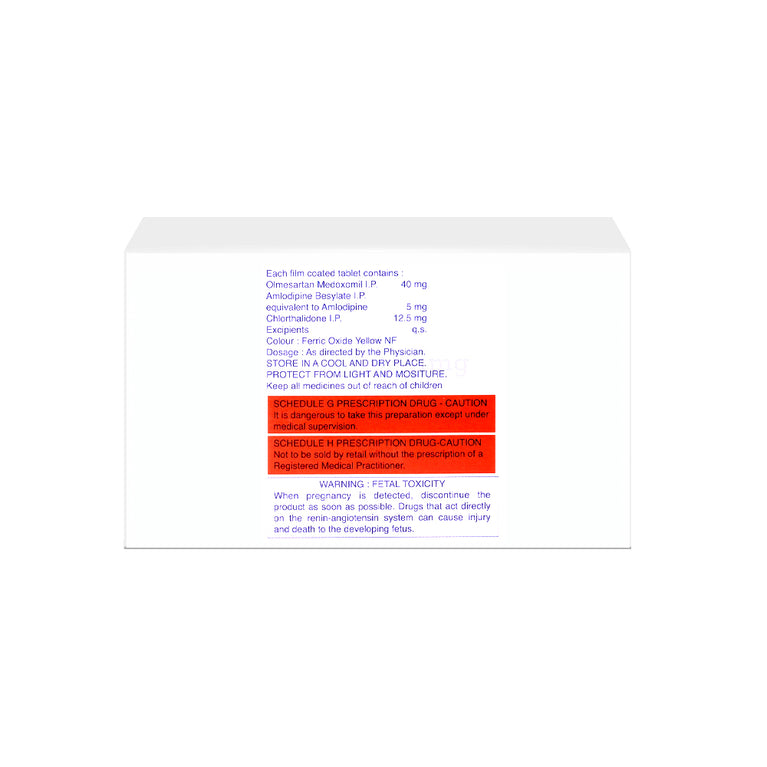
The combination is generally avoided during pregnancy.
Storage Conditions
Store in the original packaging in a cool, dry place away from sunlight and moisture. Keep out of children's reach.
FAQs
What is this combination used for?
It is used to control high blood pressure when several medicines are needed.
How do the three medicines work together?
Olmesartan and amlodipine relax blood vessels, while chlorthalidone removes additional sodium and water.
Can it increase urination?
Yes. Chlorthalidone is a diuretic and may increase urine production.
Can it cause dizziness?
Yes, especially if blood pressure falls too low.
Why might blood tests be needed?
Chlorthalidone can alter electrolytes, while the combination can affect kidney function.
Can I take potassium supplements?
Only if your doctor recommends them. Potassium levels need to be considered alongside the rest of your treatment.
Can it cause ankle swelling?
Yes. Amlodipine can cause swelling around the ankles and feet.
Can I stop the tablet when my blood pressure improves?
Do not stop it without discussing the change with your doctor
Content written by:
Shalu Gautam (B. Pharma)
Content Reviewed by:
Dr. Shailendra Kumar (MBBS, DNB)
Disclaimer: The information provided on this website is for general informational purposes only and is not intended as a substitute for professional medical advice, diagnosis, or treatment. Always consult with a physician or qualified healthcare provider for any medical concerns. Never disregard professional advice or delay seeking it based on the information you read here.

 Itraconazole 100mg Capsule IP1 X Rs. 28.13

 Android
 iOS