
Your shopping cart
😊 Product added to cart successfully
Product removed from cart successfully
 982 people viewed recently


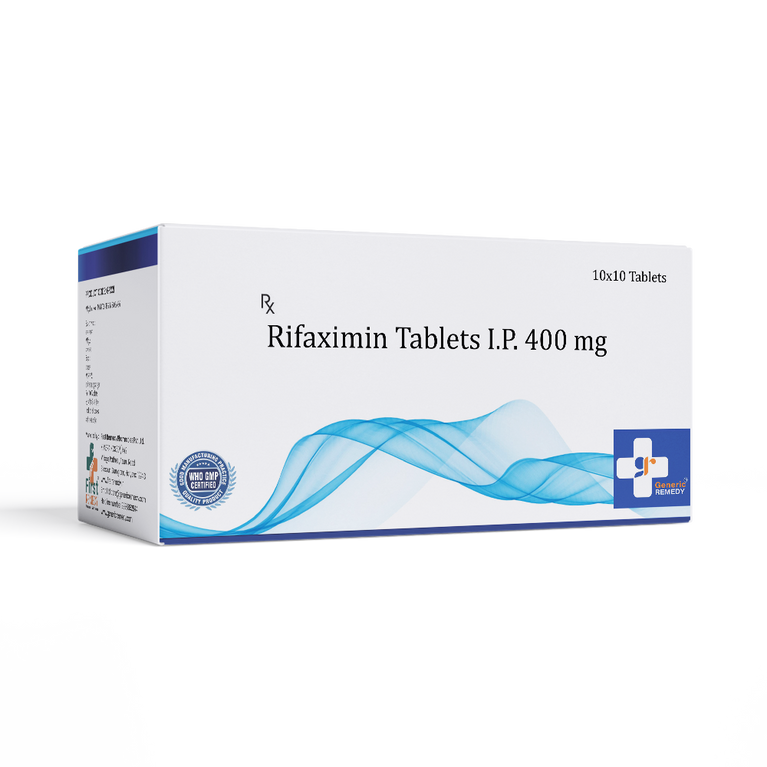
10 tablets in 1 strip
(Inclusive of all taxes)

Prescription Required
Couldn't load pickup availability
Free Shipping on your First Order above ₹199, Delivery within 3–5 days of your order.


Product Description
Rifaximin Tablets 400 mg IP is a non-systemic, broad-spectrum rifamycin antibiotic with minimal gastrointestinal absorption (<0.4%), concentrating action in the gut lumen. It is indicated for treating noninvasive bacterial infections of the GI tract, including traveler's diarrhea caused by noninvasive
Escherichia coli (not invasive or dysentery), and reducing recurrence of hepatic encephalopathy (HE) in patients with advanced liver disease. It may also be used off-label or in some IP formulations for irritable bowel syndrome with diarrhea (IBS-D), though 550 mg is preferred.
By targeting bacterial RNA synthesis, it eradicates pathogens without significant systemic exposure, reducing resistance and side effect risks compared to absorbable antibiotics. Prescription-only; not for systemic infections or viral/bloody diarrhea.
Uses
Treatment of traveler's diarrhea in adults and children ≥12 years caused by noninvasive E. coli (non-dysenteric; duration 3 days)
Reduction of overt HE recurrence in adults with cirrhosis (maintenance therapy to lower ammonia-producing gut bacteria)
Symptomatic relief of IBS-D in adults (non-constipating bacterial overgrowth; though 550 mg TID is standard, 400 mg may be used in some regimens)
Not indicated for inflammatory bowel disease (e.g., Crohn's, ulcerative colitis), C. difficile-associated diarrhea (may worsen), bloody/invasive diarrhea, or systemic bacterial infections
How it works
Rifaximin is a structural analog of rifampin that acts locally in the GI tract due to poor bioavailability:
It binds irreversibly to the beta-subunit of bacterial DNA-dependent RNA polymerase, inhibiting RNA transcription and protein synthesis essential for bacterial replication.
Broad-spectrum activity against Gram-positive/negative aerobes/anaerobes (e.g., E. coli, Clostridium spp., Bacteroides), reducing pathogenic overgrowth without disrupting normal flora significantly.
In HE: Decreases urease-producing bacteria (e.g., Klebsiella), lowering ammonia production/absorption, which crosses the blood-brain barrier to cause encephalopathy.
In IBS-D/traveler's: Normalizes gut microbiota, reducing inflammation and motility issues. Onset: 1–3 days for diarrhea; 2–4 weeks for HE symptom control; minimal resistance development due to the non-absorbable nature.
Benefits
Effective for targeted GI infections: Resolves traveler's diarrhea in 60–80% of cases within 24–48 hours (per trials like TARGET 1/2 for IBS-D analogs).
Improves HE outcomes: Reduces recurrence by 50–60% (vs. placebo in trials like RiMINI), enhancing cognitive function, sleep, and quality of life in cirrhosis patients.
Alleviates IBS-D symptoms: Decreases abdominal pain (by 40%), bloating, and stool urgency/frequency (WOMAC-like scores improve 30–40%), with sustained response in 40–50% after 2 weeks.
Favorable safety: Low systemic exposure minimizes antibiotic-associated risks (e.g., no photosensitivity like rifampin); suitable for short- or long-term use in liver disease.
How to use
Swallow the tablets whole with a full glass of water. Do not crush, break, or chew them; and can be taken with or without food. This is a long-term treatment to prevent the recurrence of HE episodes. It is important to complete the full course of treatment, even if your symptoms improve. Stopping early can allow the bacteria to grow back and develop resistance.
Side Effects
Common side effects (mild, GI-related; <10% incidence):
Nausea, abdominal pain/discomfort, bloating, flatulence
Dizziness, fatigue
Less common/rare but serious side effects (seek immediate medical attention):
Hypersensitivity: Rash, itching, hives, angioedema, or anaphylaxis
Infections: Urinary tract infection (UTI), peripheral edema (fluid retention in liver disease)
Hepatic: Elevated liver enzymes (transient; monitor in cirrhosis)
Other: Clostridium difficile-associated diarrhea (rare, due to gut flora changes); myalgia, increased INR in anticoagulated patients
Side effects are self-limiting; discontinue if a severe allergic reaction or superinfection occurs.
Safety Advice
Contraindicated in: Hypersensitivity to rifamycins, intestinal obstruction, or bloody diarrhea (may mask pathogens).
Use caution in: Severe hepatic impairment (no dose adjustment needed, but monitor encephalopathy), renal disease (rare systemic effects), or concurrent P-glycoprotein inhibitors (e.g., cyclosporine—increases exposure). Not for pregnant/breastfeeding (Category C—limited data; use if benefits outweigh risks; minimal milk excretion).
Monitoring: Baseline liver function, stool culture if fever/blood; reassess HE with ammonia/psychometric tests. Avoid in viral/bloody diarrhea—confirm bacterial etiology.
Interactions: Minimal due to non-absorption, but may reduce efficacy of hormonal contraceptives (rifamycin effect); slight increase with ketoconazole. Inform doctor of all medications/supplements/herbs (e.g., St. John's wort). No alcohol restriction, but a limit on liver disease.
Lifestyle: Hydrate during diarrhea; maintain hygiene to prevent spread. Not for self-treatment—requires prescription.
Storage Conditions
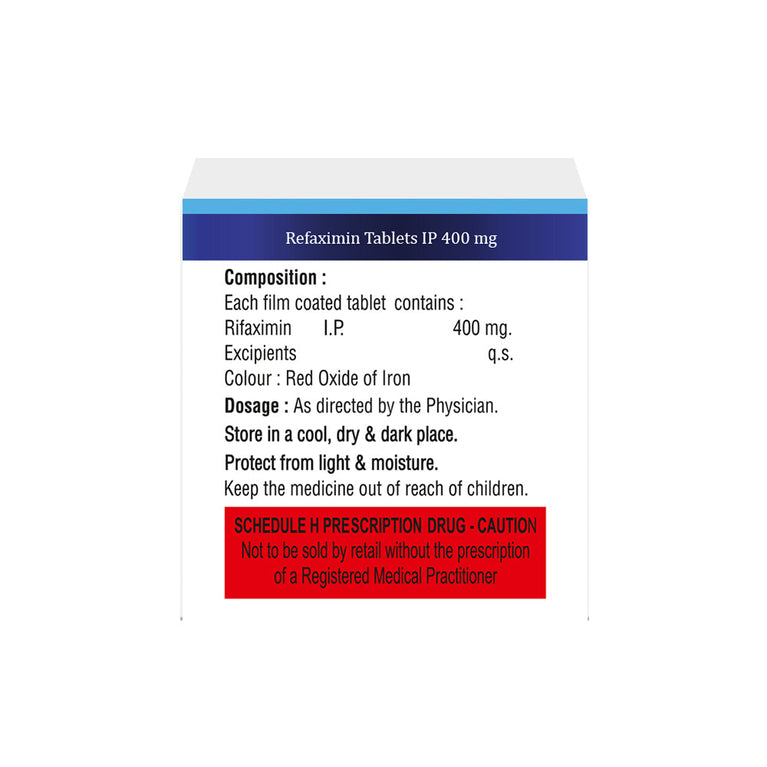
Store at a temperature below 86°F (30 °C). Protect from light and moisture.
FAQs
What are Rifaximin 400 mg tablets used for?
Rifaximin is used to treat specific conditions caused by bacterial overgrowth in the gut, including hepatic encephalopathy (to reduce recurrence), travelers' diarrhea, and irritable bowel syndrome with diarrhea (IBS-D).
Is Rifaximin a typical antibiotic?
No, it is a specialized antibiotic with minimal absorption, meaning it primarily acts in the gut and has a low risk of systemic side effects.
Is Rifaximin safe for long-term use?
Rifaximin can be used for long-term treatment of hepatic encephalopathy under a doctor's supervision. For conditions like travelers' diarrhea or IBS-D, it is used in short courses.
What if a dose is missed?
Take the missed dose as soon as you remember. If it is close to the time for your next dose, skip the missed one. Do not take a double dose.
Should the full course of treatment be completed?
Yes, complete the entire course of medication as prescribed, even if you feel better, to prevent bacterial resistance.
Can Rifaximin cause allergic reactions?
Yes, allergic reactions, though rare, can occur. Seek immediate medical attention for symptoms like rash, itching, hives, or swelling.
Does Rifaximin interact with other medications?
Inform your doctor and pharmacist about all medications and supplements you are taking.
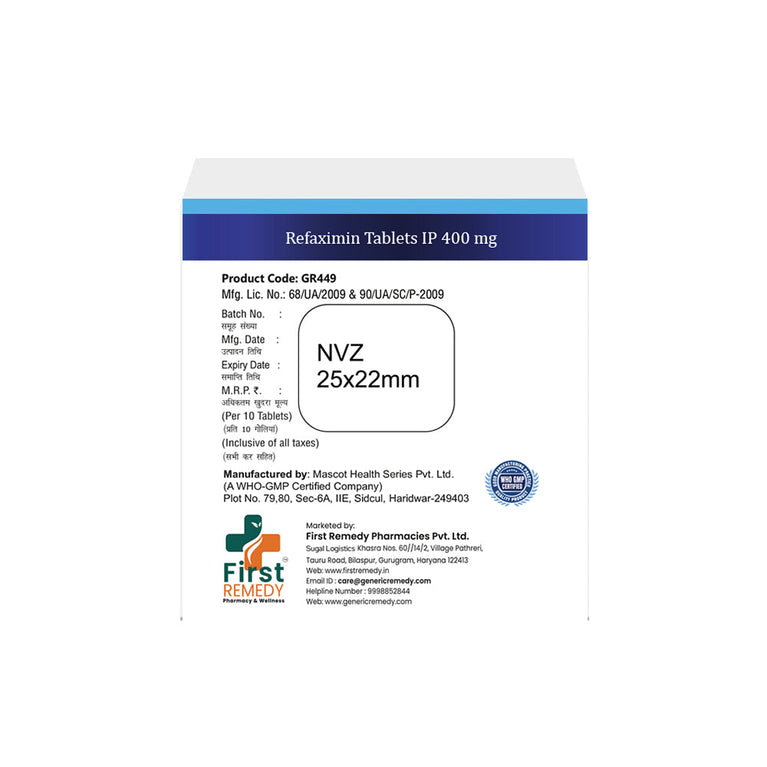
 Manufacturer Name:
 Mascot Health Series Private Limited
Marketed by: First Remedy Pharmacies Private Limited
The information provided on this website is for general informational purposes only and is not intended as a substitute for professional medical advice, diagnosis, or treatment. Always consult with a physician or qualified healthcare provider for any medical concerns. Never disregard professional advice or delay seeking it based on the information you read here.


 Android
 iOS
iOS