
Your shopping cart
😊 Product added to cart successfully
Product removed from cart successfully
 982 people viewed recently


10 tablets in 1 strip
(Inclusive of all taxes)

Prescription Required


Couldn't load pickup availability
Free shipping on orders above ₹199. Delivery within 3–8 business days.
Product Description
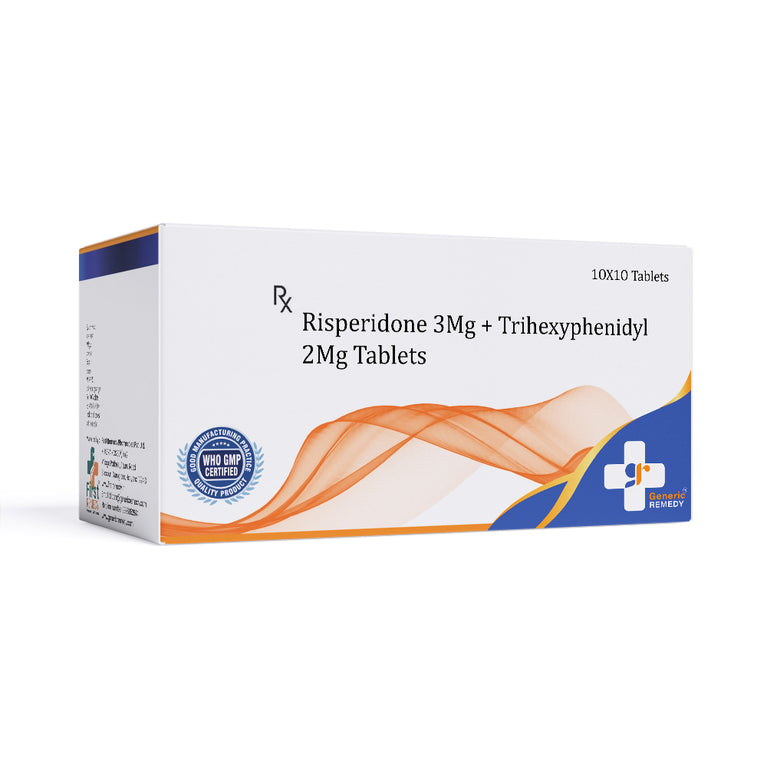
Risperidone is an antipsychotic medicine. Trihexyphenidyl is an anticholinergic medicine that may be used when an antipsychotic causes certain stiffness or tremor symptoms.
The two ingredients do different jobs. Trihexyphenidyl is not suitable for every type of abnormal movement, so new or unusual movements should be assessed rather than automatically treated by increasing the anticholinergic medicine.
Uses
Used under medical supervision for schizophrenia and related psychotic disorders, with trihexyphenidyl included when selected antipsychotic-related movement symptoms require treatment.
How It Works
Risperidone affects dopamine and serotonin signalling in the brain. This can reduce symptoms such as hallucinations, delusions, and disordered thinking.
Trihexyphenidyl reduces muscarinic cholinergic activity and may relieve some parkinsonian symptoms such as stiffness and tremor.
How to Use
Benefits
Side Effects
Risperidone can affect weight, blood glucose, cholesterol, prolactin levels, and movement. Trihexyphenidyl can cause anticholinergic effects such as urinary retention, confusion, blurred vision, and difficulty tolerating heat. Severe stiffness accompanied by fever, confusion, a sudden change in consciousness, or new uncontrolled movements needs urgent medical assessment.
Safety Advice
Storage Conditions
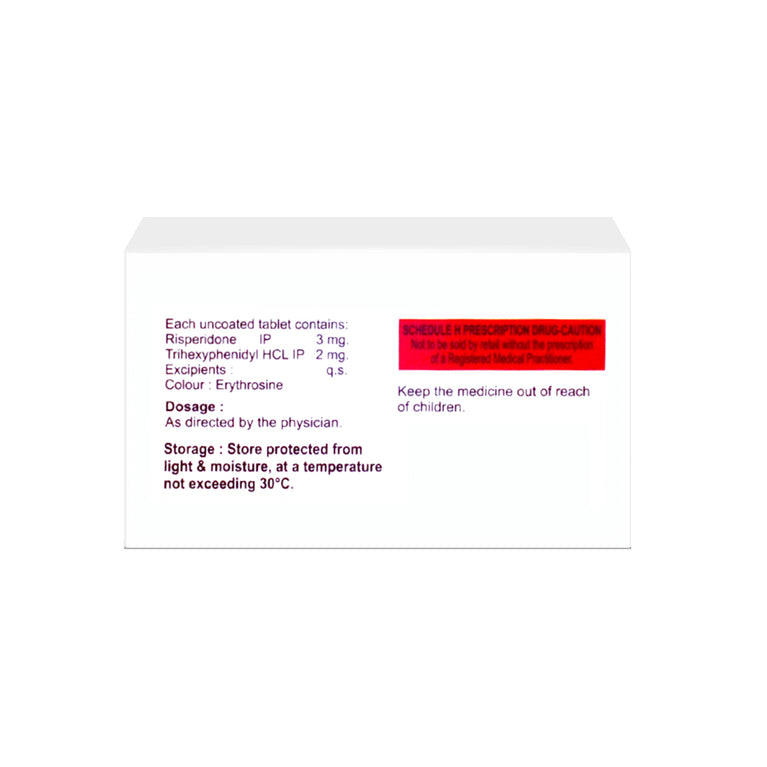
Store at room temperature in a dry place away from direct sunlight and moisture. Keep out of children's reach.
FAQs
What is this combination used for?
It is used for certain psychotic disorders, with trihexyphenidyl included when selected movement symptoms need treatment.
How does risperidone work?
It changes dopamine and serotonin signalling in the brain.
Why is trihexyphenidyl included?
It may reduce stiffness and tremor associated with some antipsychotic treatment.
Does trihexyphenidyl treat every abnormal movement?
No. Some movement disorders require a different assessment and treatment.
Can the combination cause drowsiness?
Yes. Dizziness and drowsiness can occur.
Why might blood sugar and cholesterol be checked?
Risperidone can affect metabolic measurements in some patients.
Can I drink alcohol?
Alcohol may increase drowsiness and dizziness, so it is generally best avoided.
Can I stop risperidone suddenly?
Do not stop it or change the dose without medical advice.
 Manufacturer Name:
Marketed by:
First Remedy Pharmacies Private Limited
The information provided on this website is for general informational purposes only and is not intended as a substitute for professional medical advice, diagnosis, or treatment. Always consult with a physician or qualified healthcare provider for any medical concerns. Never disregard professional advice or delay seeking it based on the information you read here.


Added to Cart Successfully!
 Android
 iOS