
Your shopping cart
😊 Product added to cart successfully
Product removed from cart successfully
 982 people viewed recently


10 tablets in 1 strip
(Inclusive of all taxes)

Prescription Required


Couldn't load pickup availability
Free shipping on orders above ₹199. Delivery within 3–8 business days.

Product Description
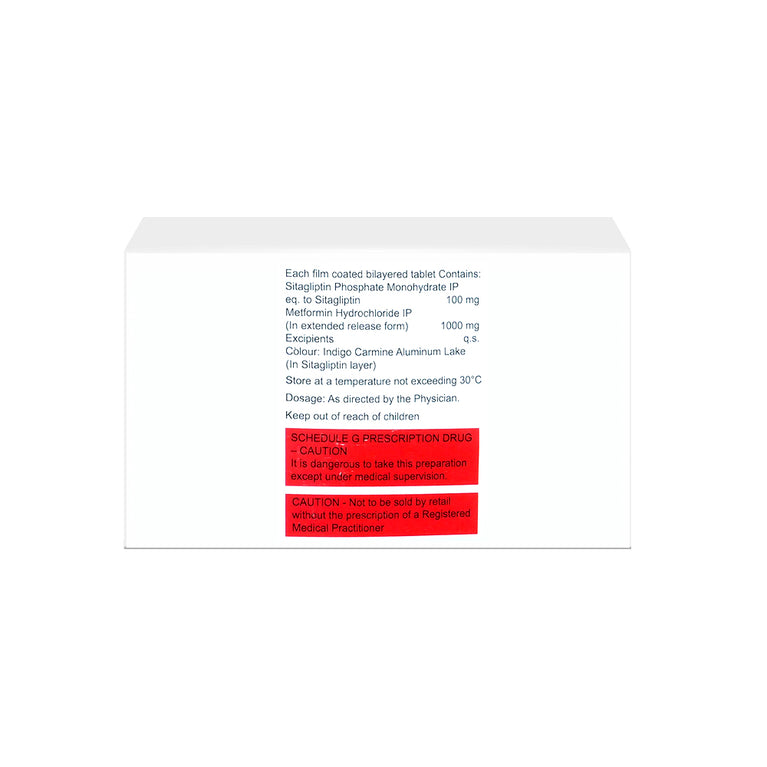
Sitagliptin 100 mg & Metformin 1000 mg Extended Release Tablets are a combination of two antidiabetic medicines used to manage type 2 diabetes mellitus in adults. This combination helps control blood sugar levels when diet, exercise, and other lifestyle measures alone are not sufficient.
Sitagliptin belongs to the DPP-4 inhibitor group, while Metformin belongs to the biguanide group. Both medicines work through different mechanisms to help maintain healthy blood glucose levels.
Sitagliptin helps increase the level of insulin produced due to high blood sugar levels, while metformin reduces the production of glucose in the liver and increases insulin sensitivity. The strength that is suitable for a patient depends on some factors such as glycemic control and kidney function.
Uses
Used to improve blood sugar control in adults with type 2 diabetes, when this combination and this metformin strength have been prescribed as suitable for you.
How It Works
Sitagliptin blocks an enzyme called DPP-4, which slows the breakdown of incretin hormones. This helps the body release insulin when blood sugar is high and lowers the excess glucagon that pushes blood sugar up.
Metformin reduces the amount of glucose produced by the liver and makes the body's tissues respond better to insulin.
How to Use
Take the tablet exactly as your doctor has prescribed, usually with a meal.
Swallow it whole with water. Do not crush, chew, or split it unless your doctor specifically tells you to.
Try to take it at the same time each day.
If you miss a dose, take it when you remember, unless it is nearly time for the next one. Do not take a double dose.
You may occasionally see an empty tablet shell in your stool. This is normal for extended-release tablets.
Benefits
Helps improve blood sugar control in adults with type 2 diabetes.
Lowers the amount of glucose made by the liver.
Puts two medicines into one tablet, so there is less to remember each day.
Side Effects
Nausea.
Diarrhoea.
Abdominal discomfort.
Indigestion.
Reduced appetite.
Headache.
These effects are often mild and tend to ease as your body gets used to the medicine, especially when it is taken with food.
See a doctor immediately if you have symptoms of lactic acidosis such as weakness, difficulty breathing, muscle pain, excessive tiredness, and vomiting.
Safety Advice
Have your kidney function checked before starting and during treatment, as your doctor advises.
Tell your doctor if you have kidney, liver, or heart disease.
Tell your doctor if you have ever had pancreatitis.
Avoid excessive alcohol, as it increases the risk of serious side effects with metformin.
Inform your healthcare team that you take this medicine before any surgery or scan that uses contrast dye.
Tell your doctor about all the diabetes medicines you take, as some combinations can raise the risk of low blood sugar.
Do not change your dose just because your blood sugar readings have improved.
Storage Conditions
Store at room temperature in a dry place away from direct sunlight and moisture. Keep out of the reach of children and follow the storage instructions on the pack.
FAQs
What is the 1000 mg version used for?
It is used to improve blood sugar control in adults with type 2 diabetes when your doctor has decided this metformin strength suits your treatment.
Is it simply a stronger version of the 500 mg tablet?
It contains twice the amount of metformin, while the sitagliptin stays at 100 mg. The right strength depends on your individual treatment plan, so it should only be used as prescribed.
Should it be taken with food?
Usually, yes. Taking metformin with a meal helps reduce stomach upset.
Can the tablet be crushed?
No. The extended-release tablet should be swallowed whole. Crushing or splitting it can release too much metformin at once.
Can it cause low blood sugar?
The risk is low when it is used on its own. It can rise if you also take insulin or certain other diabetes medicines, skip meals, or drink heavily.
Can it affect the kidneys?
Metformin is cleared by the kidneys, so how well they work decides whether this medicine is suitable and which dose you can safely take. Your doctor will monitor this.
Can alcohol cause problems with metformin?
Yes. Heavy alcohol intake can increase the risk of serious metformin-related complications, including lactic acidosis.
Can I stop it when my glucose improves?
No. Speak to your doctor first. Improved readings usually mean the treatment is working, and blood sugar can rise again if it is stopped.
 Manufacturer Name:
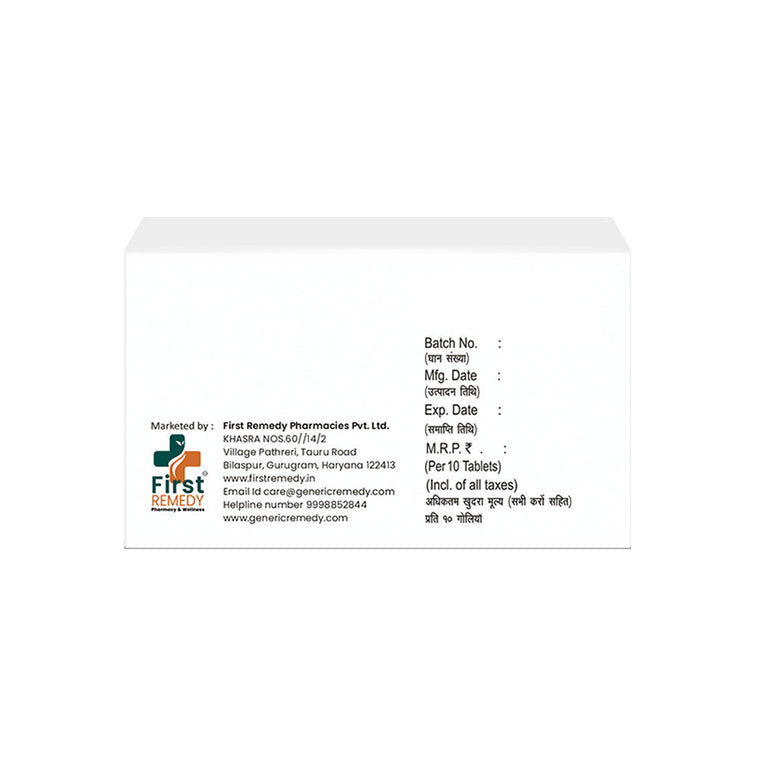
Marketed by:
First Remedy Pharmacies Private Limited
The information provided on this website is for general informational purposes only and is not intended as a substitute for professional medical advice, diagnosis, or treatment. Always consult with a physician or qualified healthcare provider for any medical concerns. Never disregard professional advice or delay seeking it based on the information you read here.


Added to Cart Successfully!
 Android
 iOS