
Your shopping cart
😊 Product added to cart successfully
Product removed from cart successfully
 982 people viewed recently


10 tablets in 1 strip
(Inclusive of all taxes)

Prescription Required


Couldn't load pickup availability
Free shipping on orders above ₹199. Delivery within 3–8 business days.
Product Description
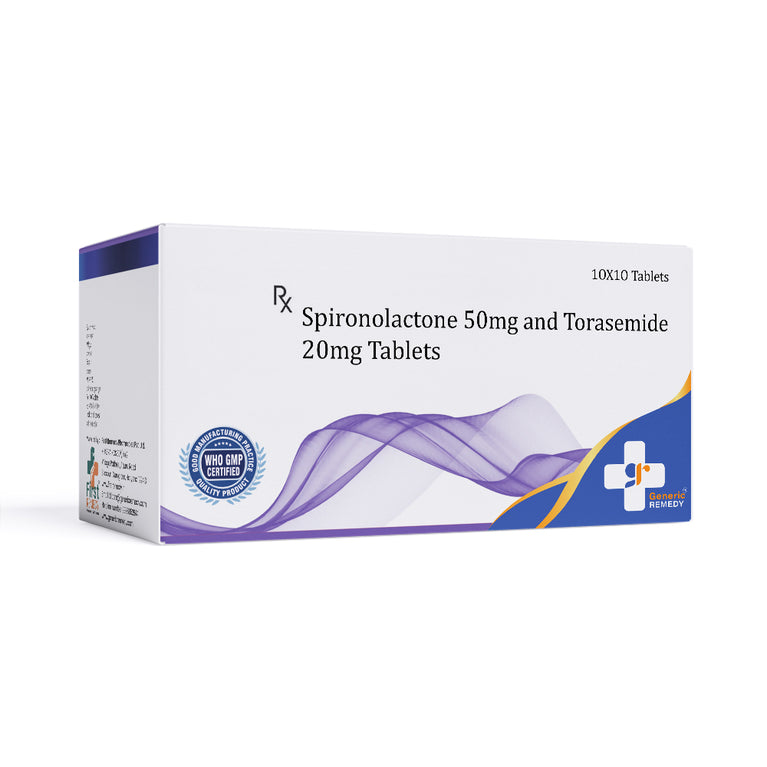
Spironolactone 50 mg & Torasemide 20 mg tablets are a combination of two diuretic medicines used to manage fluid retention (oedema) in the body. This combination helps remove excess water and salt through urine, thereby reducing swelling and fluid accumulation.
Both spironolactone and torasemide are diuretics, but they act in different ways. Torasemide helps the kidneys to throw off sodium and water. Spironolactone blocks aldosterone and tends to retain potassium.
The combination may be prescribed when excess fluid is causing swelling or congestion. Treatment requires a balance between removing enough fluid and avoiding dehydration, low blood pressure, kidney problems, or abnormal potassium levels.
Uses
Used to reduce excess fluid and swelling in selected heart, liver, kidney, and other conditions when combined diuretic treatment is prescribed.
How It Works
Torasemide acts in the loop of Henle and reduces sodium and chloride reabsorption, increasing urine production.
Spironolactone blocks aldosterone receptors. This reduces sodium retention while limiting potassium loss.
How to Use
Take the tablet exactly as prescribed, preferably at the recommended time each day.
Because it increases urine production, it is often taken earlier in the day unless your doctor advises otherwise.
Benefits
Reduces excess fluid and swelling.
Increases the removal of sodium and water.
Combines two diuretic mechanisms.
May help control fluid congestion in selected heart or liver conditions.
Side Effects
Increased urination.
Dizziness or light-headedness.
Weakness or tiredness.
Stomach discomfort.
Dehydration.
Low blood pressure.
Changes in potassium or other electrolytes.
Spironolactone can cause high potassium, particularly in people with kidney disease or those taking other potassium-raising medicines. Excessive fluid loss can worsen kidney function.
Safety Advice
Renal function, blood pressure, and electrolytes monitoring may be required. Potassium supplements and potassium salt substitutes are to be avoided without the advice of a doctor.
In case you have a history of any of the following conditions, inform your doctor: kidney disorder, liver disorder, diabetes, and low blood pressure.
Discuss regular use of NSAID painkillers because they can affect kidney function and reduce diuretic effects in susceptible people.
Do not change your fluid intake substantially without medical advice, particularly if you have a prescribed fluid restriction.
Do not stop treatment without medical advice.
Storage Conditions
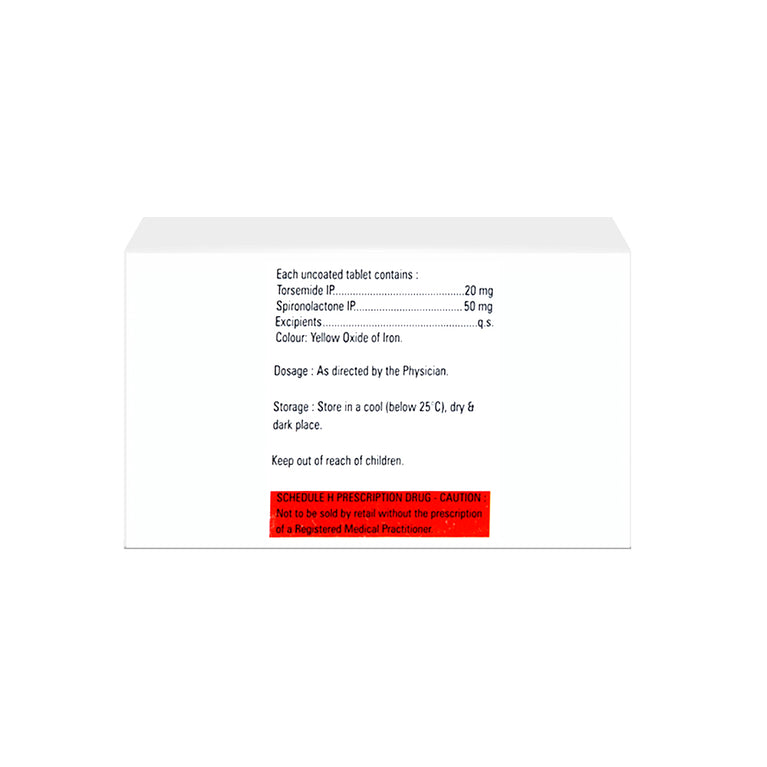
Store in a cool, dry place away from sunlight and moisture. Keep out of children's reach and follow the package instructions.
FAQs
What is this combination used for?
It is used to manage excess fluid retention and swelling in selected medical conditions.
Why are two diuretics combined?
Torasemide produces strong fluid removal, while spironolactone works through aldosterone blockade and tends to conserve potassium.
Will it make me urinate more?
Yes. Increased urination is an expected effect.
Should I take it at night?
It may increase urination, so it is commonly taken earlier in the day unless your doctor advises otherwise.
Can it change potassium levels?
Yes. Spironolactone can raise potassium, while torasemide can lower potassium and other electrolytes.
Can I take potassium supplements?
Do not take them unless specifically advised.
Why are kidney tests needed?
Both medicines affect kidney-related fluid and electrolyte handling.
Should I drink extra water?
Do not change your fluid intake without guidance. Some patients need adequate fluid intake, while others require fluid restriction.
 Manufacturer Name:
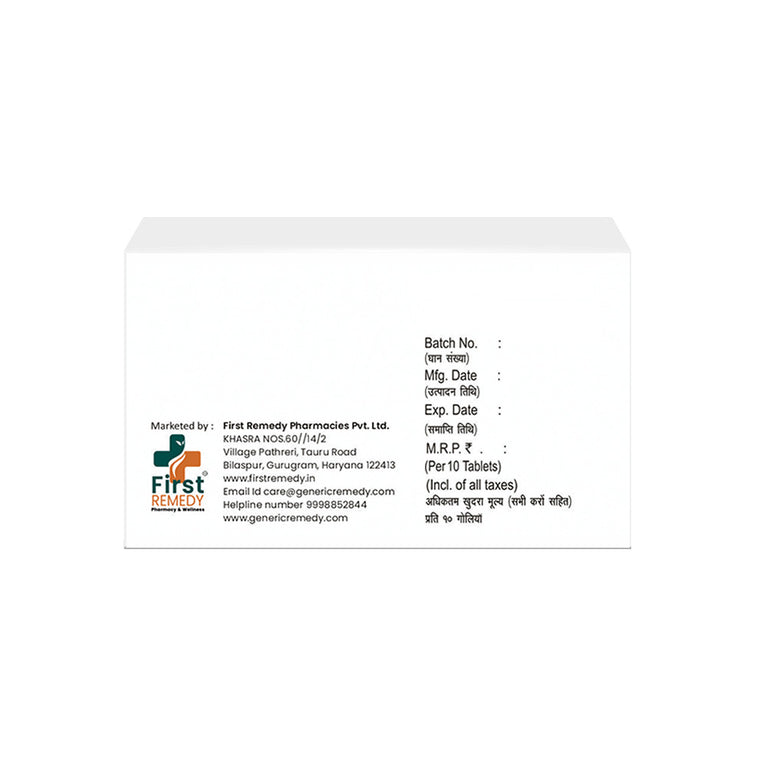
Marketed by:
First Remedy Pharmacies Private Limited
The information provided on this website is for general informational purposes only and is not intended as a substitute for professional medical advice, diagnosis, or treatment. Always consult with a physician or qualified healthcare provider for any medical concerns. Never disregard professional advice or delay seeking it based on the information you read here.


Added to Cart Successfully!
 Android
 iOS