
Your shopping cart
😊 Product added to cart successfully
Product removed from cart successfully
 982 people viewed recently


10 tablets in 1 strip
(Inclusive of all taxes)

Prescription Required
Couldn't load pickup availability
Free Shipping on your First Order above ₹199, Delivery within 3–5 days of your order.


Product Description
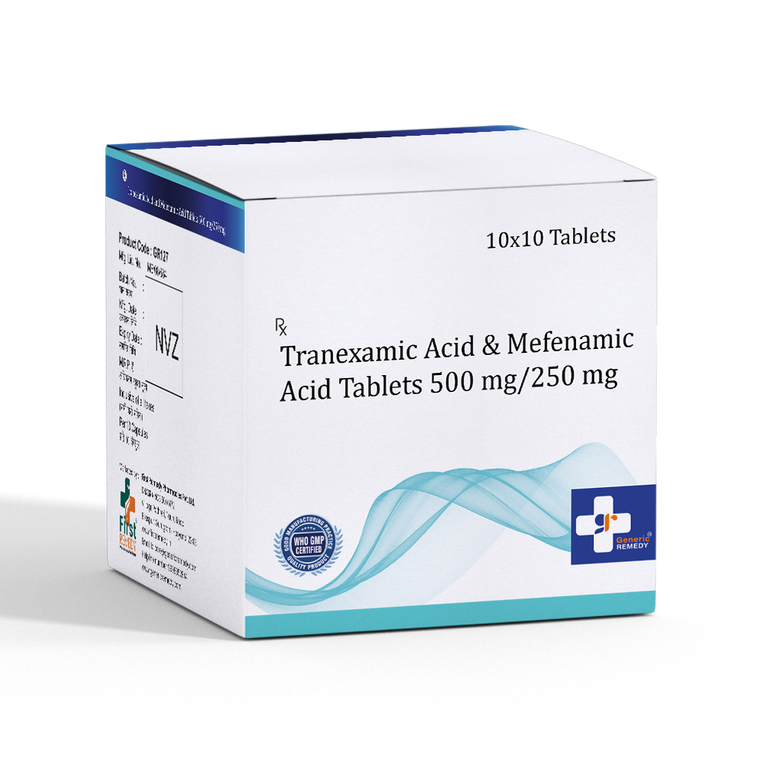
Tranexamic Acid 500 mg & Mefenamic Acid 250 mg Tablets IP is a fixed-dose combination oral medication for short-term management of heavy menstrual bleeding (menorrhagia) and associated menstrual pain (dysmenorrhea) in women of reproductive age.
Tranexamic acid is an antifibrinolytic that stabilizes blood clots to reduce bleeding, while mefenamic acid is a non-steroidal anti-inflammatory drug (NSAID) that alleviates pain and cramps by inhibiting prostaglandin synthesis.
This non-hormonal combo provides dual symptomatic relief without affecting ovulation or the menstrual cycle. It is prescription-only and not suitable for long-term use or non-menstrual conditions like general hemorrhage, fever, inflammation, or migraine.
Uses
Short-term treatment of menorrhagia (heavy menstrual bleeding) to reduce blood loss volume (typically 30–50% reduction per cycle)
Relief of primary dysmenorrhea (painful menstrual cramps) and associated symptoms like lower abdominal pain
Adjunctive therapy in women with menorrhagia not controlled by NSAIDs alone or when hormonal options are contraindicated
Not indicated for secondary menorrhagia (e.g., due to fibroids/uterine pathology—investigate cause first), postpartum hemorrhage, surgical bleeding, general inflammation, fever, swelling, migraine, or chronic pain
How it works
This combination targets complementary aspects of menstrual disorders:
Tranexamic Acid (500 mg): An antifibrinolytic agent that competitively inhibits plasminogen activator, preventing the conversion of plasminogen to plasmin. Plasmin normally degrades fibrin clots (fibrinolysis); by stabilizing clots in the endometrium, it reduces menstrual blood loss without vasoconstriction. Effects peak in 2–3 hours; duration 4–6 hours.
Mefenamic Acid (250 mg): An anthranilic acid derivative NSAID that non-selectively inhibits cyclooxygenase (COX-1 and COX-2) enzymes, reducing prostaglandin production in uterine tissues. Prostaglandins cause uterine contractions and pain; inhibition alleviates cramps, inflammation, and dysmenorrhea. Effects onset in 30 minutes; duration 4–6 hours.
Synergy: Addresses both bleeding and pain during menses; non-hormonal, preserving fertility.
Benefits
Dual relief: Reduces menstrual blood loss (by 26–60% in trials like WOMAN) and dysmenorrhea severity (pain scores drop 50–70%), improving quality of life and reducing anemia risk.
Non-hormonal alternative: Avoids side effects of oral contraceptives (e.g., mood changes, weight gain, thrombosis in some) or tranexamic monotherapy (less pain relief).
Rapid onset: Symptom improvement within 1–2 days of starting; convenient for perimenstrual use (3–5 days).
Well-tolerated short-term: Lower GI risk than higher-dose NSAIDs; supports daily activities without sedation.
How to use
Start taking this medication at the beginning of your period (on the first day) or when heavy bleeding starts, and continue for a few days, as prescribed by your doctor. Swallow the tablet whole with a glass of water, with or after a meal, to reduce the risk of stomach upset. This medication is intended for short-term use, typically for 3 to 4 days during menstruation. Do not use it for extended periods without medical advice.
Side Effects
Common side effects (usually mild and GI-related from NSAIDs):
Nausea, vomiting, diarrhea, constipation, or dyspepsia (take with food to reduce)
Headache, dizziness, drowsiness, or fatigue
Less common/rare but serious side effects (seek immediate medical attention):
Thrombotic events (from tranexamic): Leg swelling/pain (DVT), shortness of breath/chest pain (PE), stroke symptoms (vision changes, severe headache)
GI complications (from mefenamic): Black/tarry stools, coffee-ground vomit, severe abdominal pain (ulcer/bleed)
Allergic: Rash, itching, swelling; tinnitus (ringing in ears)
Other: Liver issues (jaundice, dark urine, loss of appetite); renal impairment (reduced urine); anemia from chronic use
Risk increases with duration >5 days, alcohol, or comorbidities; monitor for bleeding/clot signs.
Safety Advice
Inform your doctor if you have a history of blood clots, including deep vein thrombosis or pulmonary embolism. Also, discuss any history of heart disease, stroke, kidney or liver disease, stomach ulcers, or asthma. Inform your doctor also if you are pregnant, planning to become pregnant, or breastfeeding. This medication is generally not recommended during pregnancy.
Be vigilant for signs of blood clots, such as sudden, severe pain or swelling in a leg, shortness of breath, chest pain, or vision changes, or report any symptoms of stomach bleeding, such as black, tarry stools, vomiting that looks like coffee grounds, or severe stomach pain. Seek immediate medical attention if these occur. Avoid or limit alcohol consumption while taking this medication, as it increases the risk of stomach bleeding and other side effects.
Storage Conditions
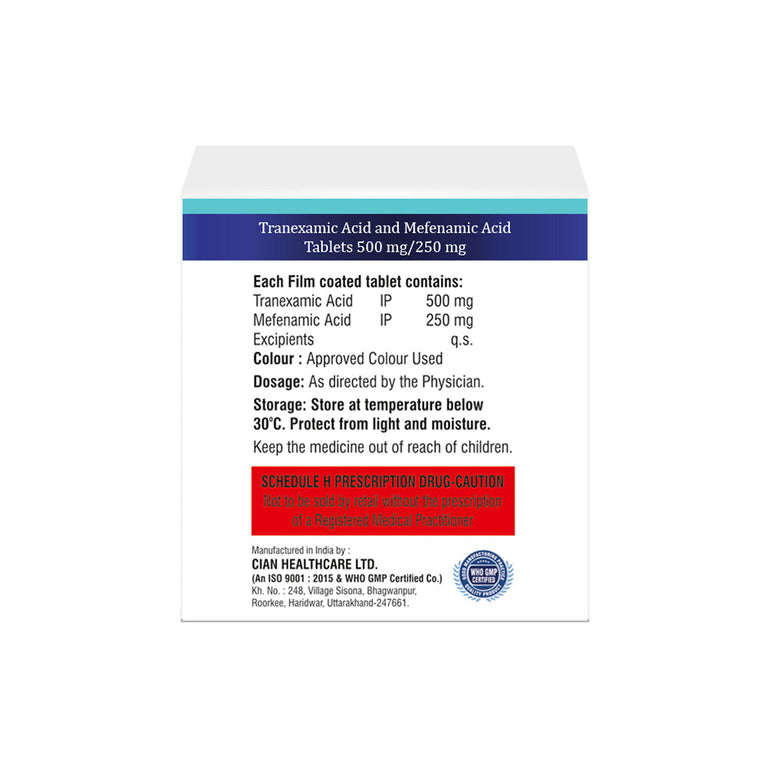
Store at a temperature below 86°F (30 °C). Protect from light and moisture.
FAQs
Is this a hormonal medication?
No, this is a non-hormonal treatment option for heavy menstrual bleeding.
Is this medication suitable for general pain relief?
No, this medication is specifically for menstrual pain and is not intended for general, long-term pain management.
How long should I take it?
This medication is intended for short-term use, usually for 3 to 4 days during menstruation, or as prescribed by a doctor.
Can I stop taking it if my symptoms improve?
Complete the course of treatment as prescribed. If there are concerns, consult a doctor.
Can it cause stomach bleeding?
Yes, mefenamic acid (NSAID) can increase the risk of stomach bleeding or ulcers, especially with long-term use. Take with food to minimize risk.
Are there any interactions with other medications?
Yes, it can interact with other NSAIDs, aspirin, and blood thinners. Always inform the doctor about all medications and supplements.
What are the signs of a serious side effect?
Seek immediate medical attention for symptoms like chest pain, severe leg pain, swelling, shortness of breath, black stools, or severe allergic reactions.
Does it affect fertility?
There is no evidence to suggest this medication affects fertility, but it is not recommended during pregnancy.
 Manufacturer Name:
 Cian Healthcare Limited
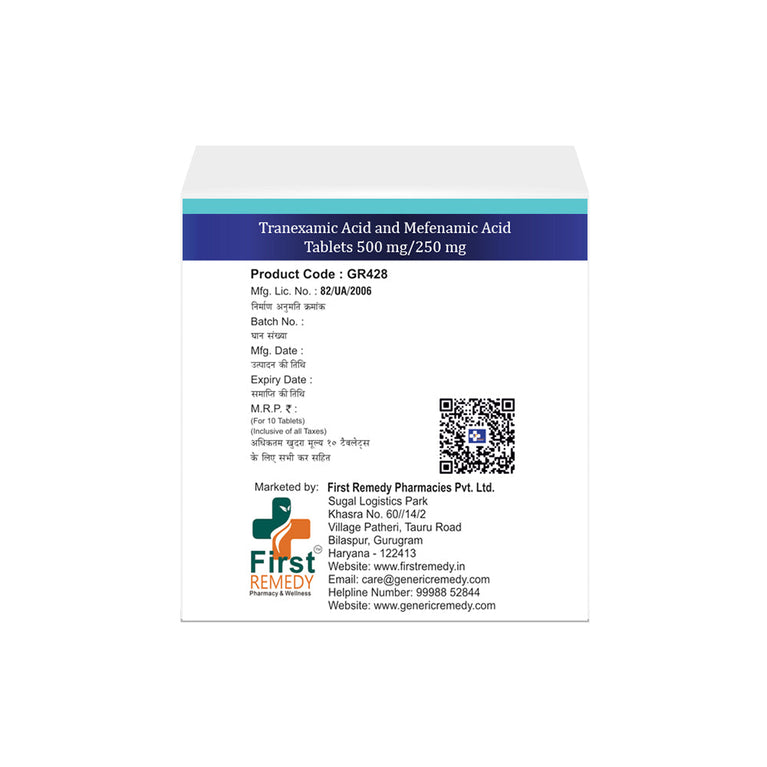
Marketed by: First Remedy Pharmacies Private Limited
The information provided on this website is for general informational purposes only and is not intended as a substitute for professional medical advice, diagnosis, or treatment. Always consult with a physician or qualified healthcare provider for any medical concerns. Never disregard professional advice or delay seeking it based on the information you read here.


 Android
 iOS
iOS